ServicesConcrete Backyards
Concrete Backyards in Tustin
We turn tired lawn and bare dirt into a usable concrete backyard: a compacted base, reinforced slab, slope that carries water away from your home and a light finish that stays cooler underfoot. You get one surface that needs no watering and very little upkeep.
One Slab Plan for the Whole Yard
A concrete backyard is more than a patio. We lay out the whole space at once: seating areas, paths to the side gate, pads for a grill or spa, and the planting beds you want to keep. Planning it as one job lets us set a single drainage pattern so every section sheds water toward a drain or the yard edge, never back against the house.
There is a comfort and cost side too. A lawn in a dry Southern California summer drinks water every week and still browns at the edges. Concrete in a natural gray or light tint reflects much of the sun instead of soaking it up the way dark pavers or asphalt do, so the surface near your back door and windows runs cooler in the afternoon. That can mean less heat radiating toward the house, and the irrigation you no longer need shows up on the water bill.
If you only need one area, our patios, stamped concrete and walkways and sidewalks pages cover those jobs on their own.
What the Work Includes
- 01
Removal and haul-off
We strip sod, roots and old flatwork down to native soil and haul the debris away. Irrigation lines inside the pour area are located and capped so nothing leaks under the new slab.
- 02
Grading and compacted base
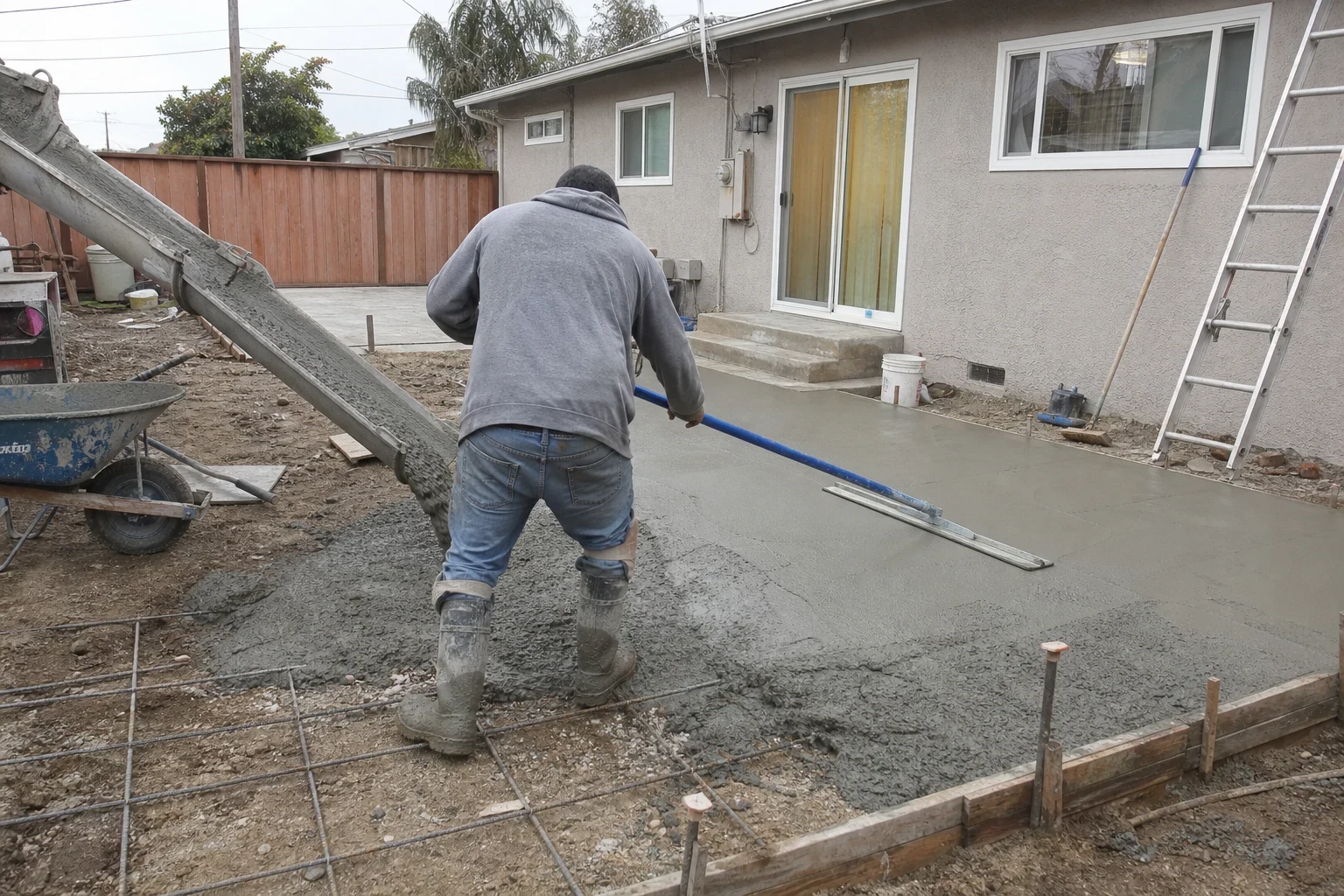
Local soils often carry clay that swells when wet and shrinks when dry. We grade, then place and compact a granular base so the slab sits on stable material rather than moving ground.
- 03
Forms and reinforcement
Forms set the finished height and slope, typically about a quarter inch of fall per foot. We raise the rebar or wire mesh off the base with small supports, because steel lying in the dirt does nothing; it has to sit near mid-depth in the concrete to hold cracks tight.
- 04
Control joints
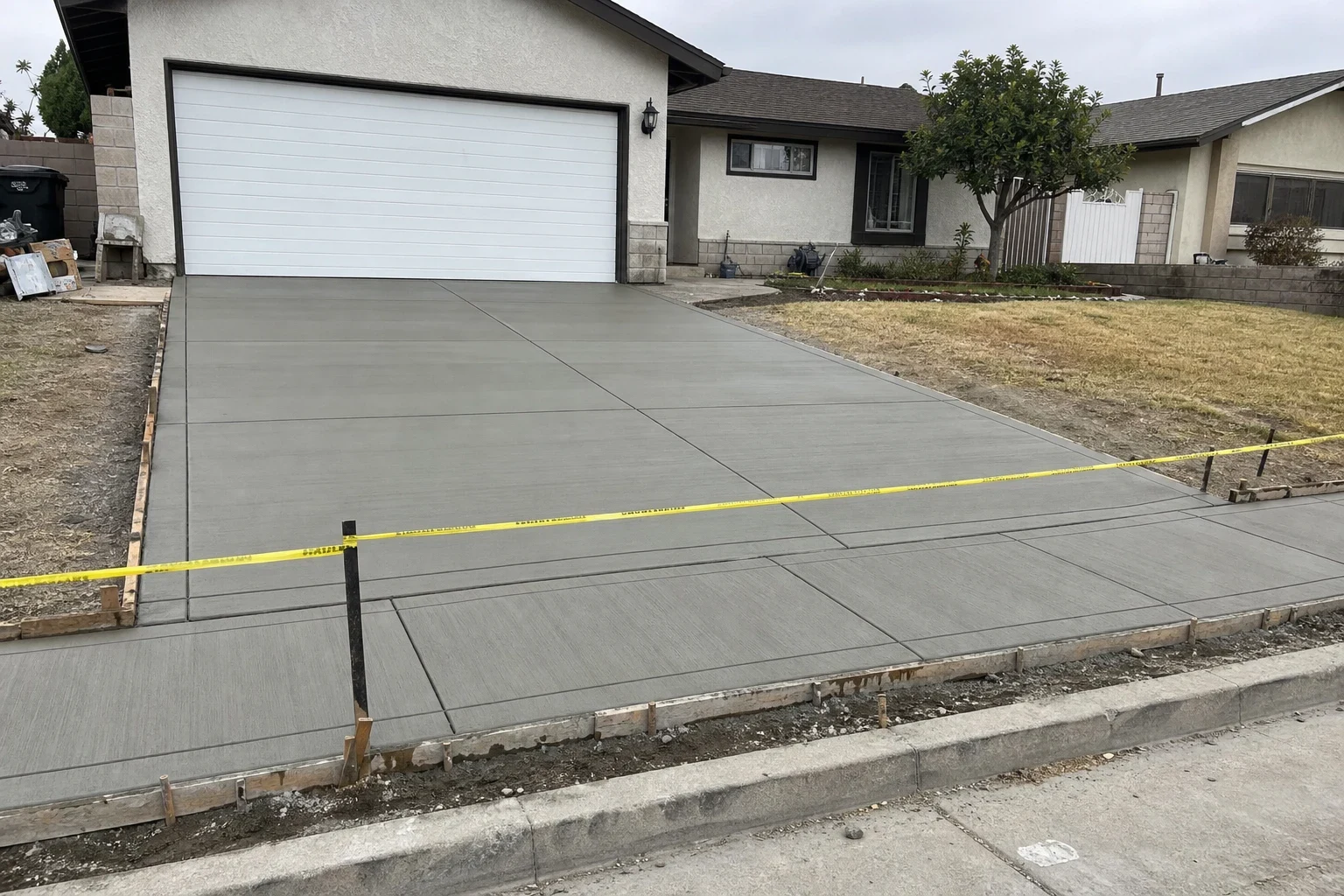
Concrete shrinks as it cures, and it will crack somewhere. We cut or tool joints at planned spacing so the cracking happens in straight lines where you won't notice it.
- 05
Finish and color
Broom finish is the standard for grip around wet feet and hoses. We can also add integral color or tie in stamped sections, and we steer you toward lighter tones if heat is a concern.
Questions about Concrete Backyards?
Call(714) 733-1781Signs Your Backyard Is Ready for Concrete
The lawn costs more than it gives
If you run sprinklers most of the year and still fight brown patches, concrete removes that water use for the covered area entirely.
Water sits near the foundation
Puddles along the back wall after rain mean the yard slopes the wrong way. A new slab lets us correct the grade so runoff moves away from your home.
Old flatwork has heaved or sunk
Slabs lifted by roots or settled into soft fill usually trace back to a poor base. Tearing out and repouring on a proper base fixes the cause, not just the surface.
Dirt and mud keep coming inside
Bare ground by the back door ends up on your floors. A continuous slab from the door to the gate gives you a clean path in every season.
The back of the house bakes in the afternoon
Dark pavers, gravel or bare dirt can hold heat close to the walls. A lighter concrete surface reflects more sunlight and cools off faster after sunset.
How a Backyard Pour Runs
- 1
Site visit and layout
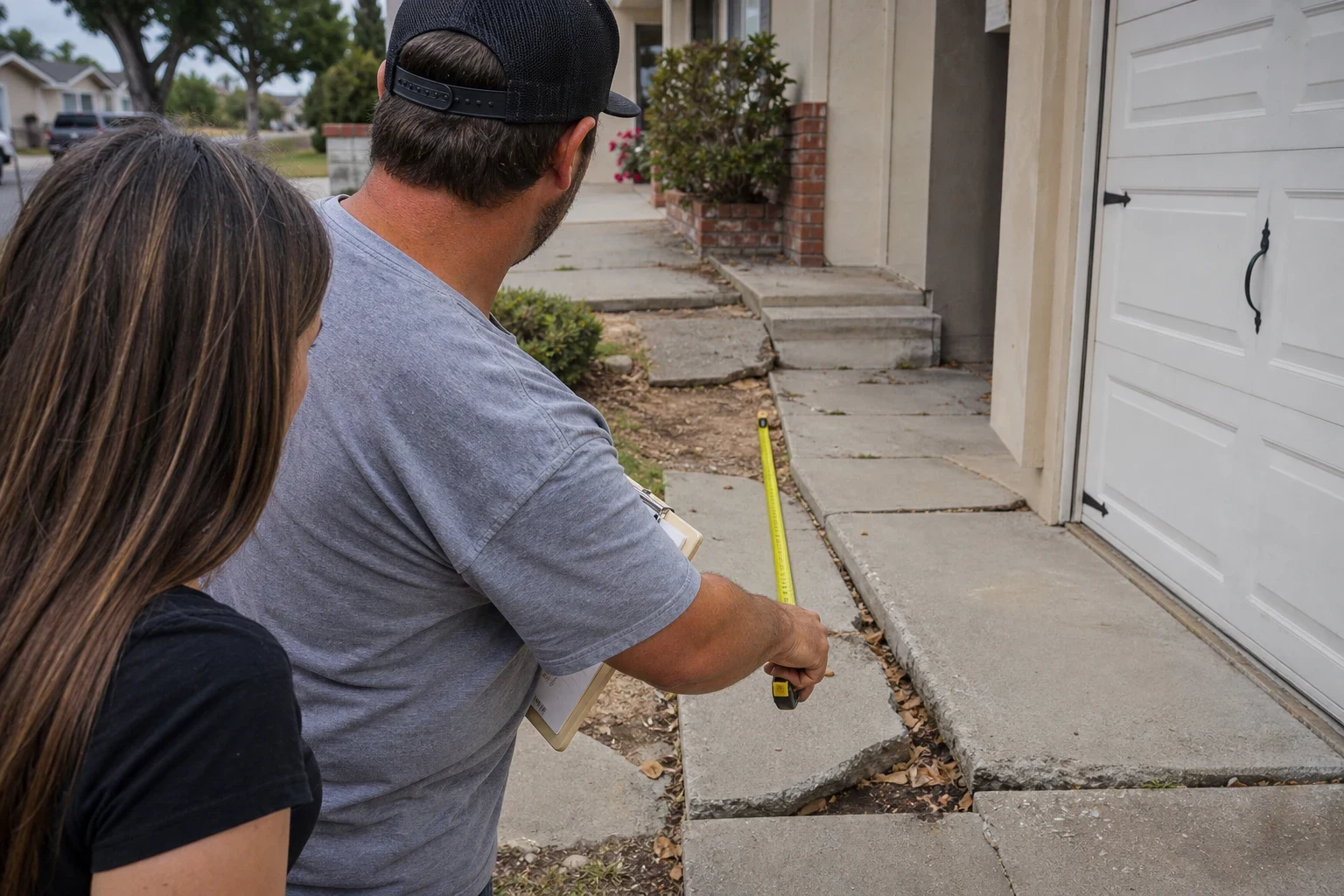
We measure the yard, check where water drains now and mark the areas you want covered. You get a written, line-item estimate that shows square footage, thickness, reinforcement and finish.
- 2
Demolition and base prep
Over a day or two we remove the old surface, grade, compact the base and set forms. We also check whether the city needs a permit for your scope, especially if drainage changes are involved.
- 3
Pour and finish
Concrete arrives by truck or pump depending on access. The crew places, screeds and floats it, then cuts joints and applies the broom texture while the surface is at the right set.
- 4
Cure and cleanup
The slab stays damp or covered with curing compound so it gains strength evenly. We pull forms, clean up and let you know when foot traffic is fine, usually after a day or so, and when furniture and grills can go back.
What Moves the Price
Backyard projects vary more than most concrete work because every yard has a different shape, access route and starting condition. Your estimate breaks out each of these so you can see where the money goes and adjust the plan before we start.
- Square footage and thickness
- Most backyard slabs are four inches thick. Areas that will carry a spa, outdoor kitchen or heavy planters may need more thickness or extra steel.
- Access to the yard
- A narrow side yard can mean wheelbarrows or a concrete pump instead of a direct pour from the truck, which adds labor and equipment.
- What comes out first
- Removing grass is quick. Breaking out old concrete, tree roots or buried debris takes more time and hauling.
- Drainage work
- Fixing a bad slope can require extra grading, area drains or a channel drain at the house line.
- Finish choices
- Plain broom finish costs least. Integral color, stamped borders or decorative sections add material and finishing time.
Backyard Concrete Questions
Will a concrete backyard make the yard hotter?
It depends on color and what it replaces. Light gray or tan concrete reflects much more sunlight than dark pavers or asphalt, so it stays cooler to the touch. Compared with a healthy lawn it will feel warmer at midday, which is why many people keep a planting bed or shade tree near the seating area.
How do you keep the slab from cracking?
No concrete is crack-proof, so the goal is control. A compacted base, reinforcement set at mid-depth, proper curing and joints spaced at regular intervals keep any cracking in the joint lines instead of across the open slab.
Where does rainwater go once the lawn is gone?
We slope the slab away from your home toward the yard edge, a planter or a drain. During the estimate we show you the planned direction of fall so there are no surprises in the first storm.
Can you leave room for trees and planting beds?
Yes. We form around beds and existing trees, keeping enough distance from trunks to reduce the risk of roots lifting the slab later.
Do you serve areas outside Tustin?
We pour backyards across nearby cities including Irvine, Orange and North Tustin. Ask when you call and we'll confirm your location.
Ready to Use Your Whole Backyard
Tell us the size of the yard, what is there now and how you want to use it. We'll talk through layout, drainage and finish so your quote matches the yard you actually want.