ServicesConcrete Slabs
Concrete Slabs in Tustin
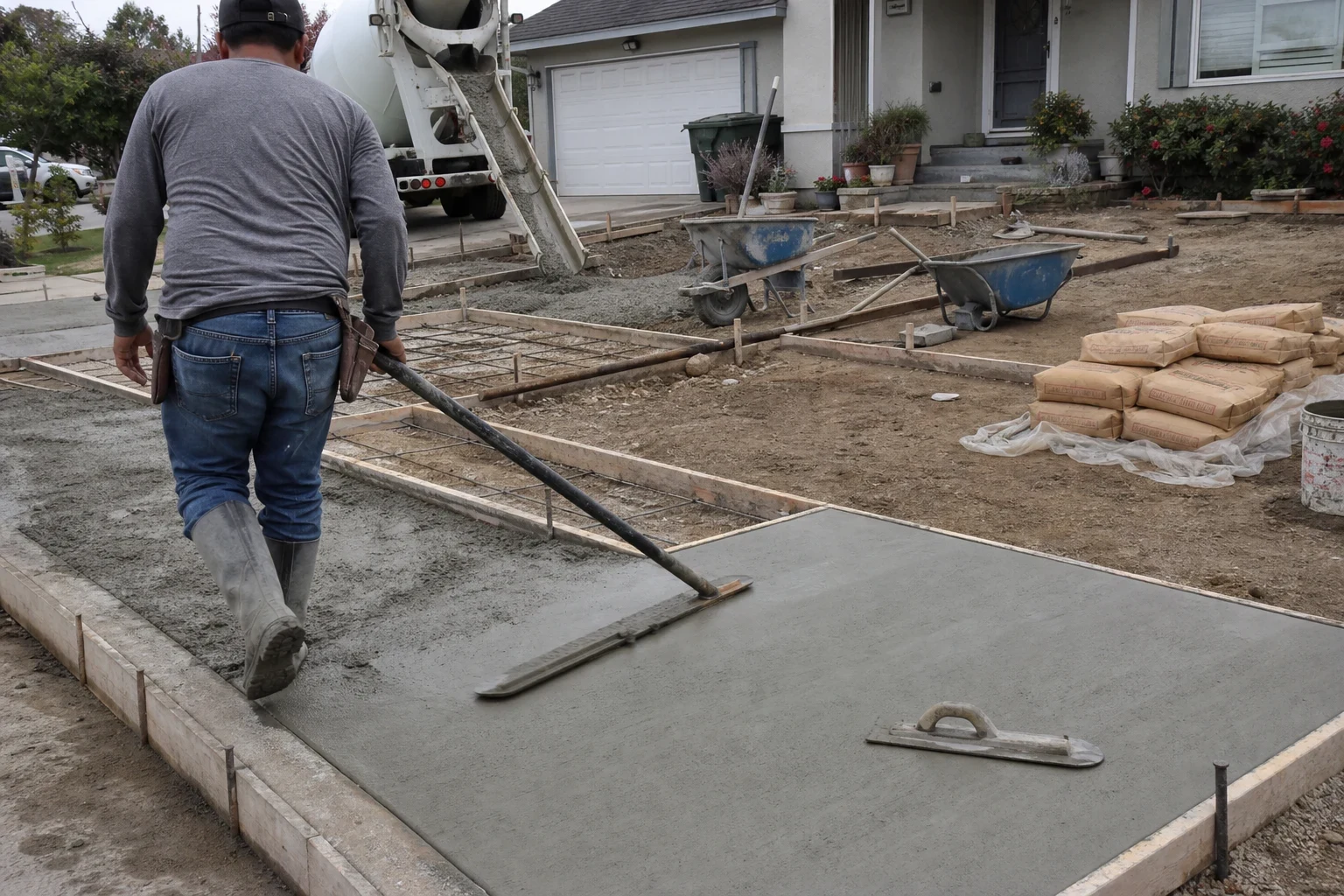
We pour outdoor slabs for sheds, hot tubs, AC condensers, water heaters and work areas. Each one goes down on a compacted base with steel reinforcement, sloped so water runs away from your home, and cut with joints that control where it cracks.
A flat, stable base for whatever sits on it
A slab is the simplest piece of concrete we pour, and the one that gets judged hardest over time. A shed that racks out of square, a spa cover that won't seal, or a condenser that tilts until its refrigerant lines strain usually traces back to what is under it. We build the slab for the load it will carry, not just for how it looks the day the forms come off.
There is a real running-cost side to this. A level spa holds its cover tight and loses less heat overnight. An AC condenser on a firm, level pad keeps its compressor mounts and line set from working loose, and a lighter broom finish stays cooler underfoot than dark pavers or bare dirt in the afternoon sun.
Larger flat areas such as a garage floor, patio or RV parking pad have their own pages, since their loads and finishes differ.
What goes into one of our slabs
- Excavation and compacted base
- We dig out topsoil and organic material, then place and compact a crushed aggregate base in lifts. Clay soils common around Orange County swell when wet and shrink when dry, so a good base under the concrete matters more than extra thickness on top.
- Steel reinforcement
- We tie rebar into a grid and raise it on small supports, so the steel ends up near mid-depth once the concrete is placed. Steel left resting on the soil contributes very little strength.
- Vapor retarder where it counts
- Under a shed, workshop or storage building we lay a polyethylene vapor retarder. It slows ground moisture wicking up into tools, flooring and stored boxes.
- Slope and drainage
- We set forms to drop roughly 1/8 to 1/4 inch per foot away from your home's foundation. Water leaves the surface instead of pooling against stucco or a sill plate.
- Control and isolation joints
- Joints are tooled or saw-cut at spacing matched to the slab thickness, and felt isolation strips go wherever the slab meets your foundation or an existing walk.
- Finish, curing and cleanup
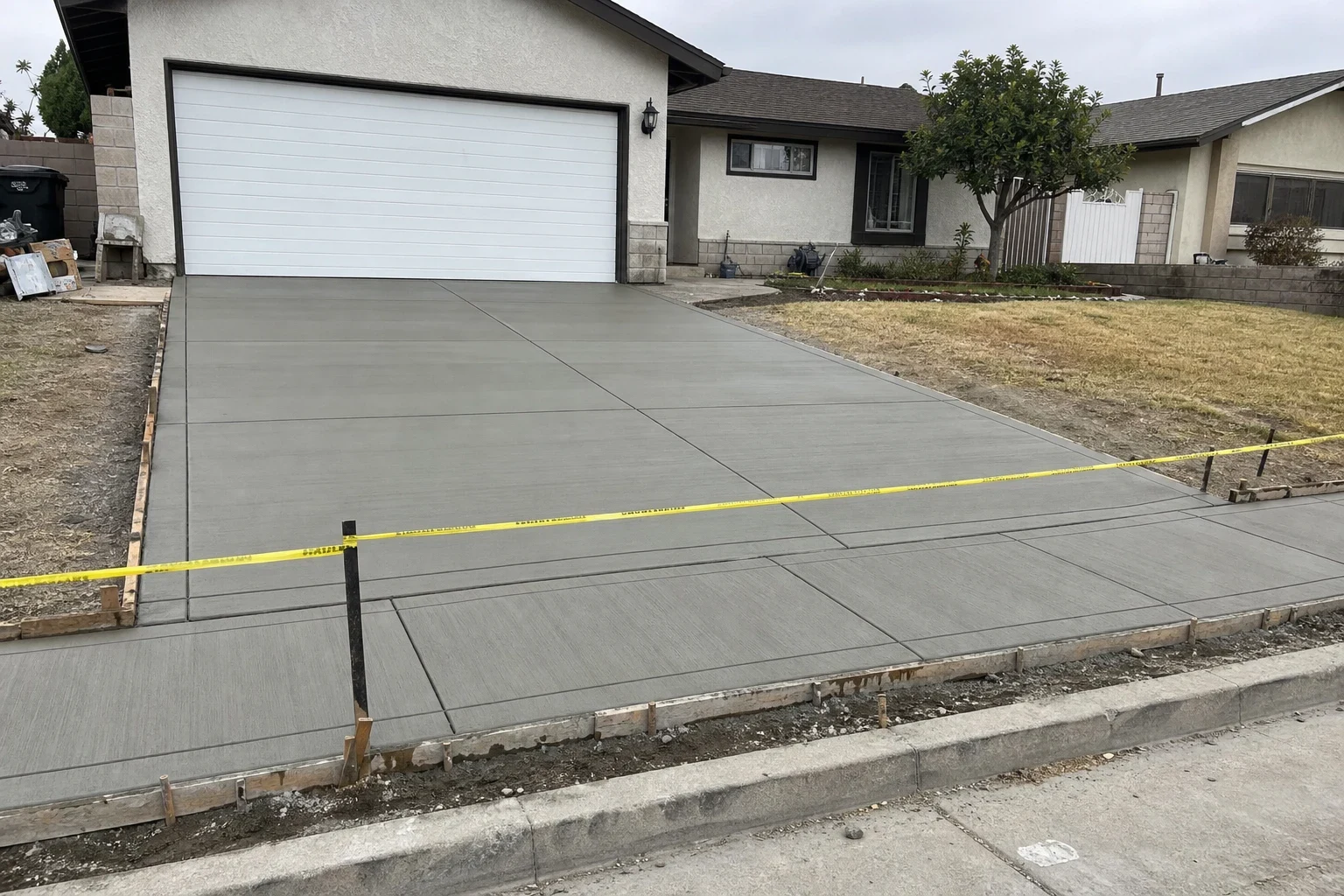
- Most slabs get a broom finish for grip. We apply a curing compound, haul off spoils and forms, and leave the area raked clean.
Signs it's time for a new slab
Your condenser sits on a plastic pad
Composite pads settle into soft soil and tip. Once the unit leans, vibration and drainage both get worse.
The shed door won't close
A shed on pavers or bare ground shifts with every wet season. Doors bind and the floor framing starts to rot from below.
Water collects near the house
If an old slab slopes toward your foundation, it feeds water to the exact place you don't want it. Removing it and pouring a properly sloped replacement solves the cause.
A spa that needs shims
Hot tubs weigh several tons when full. If yours is propped level with wood or sits on settling ground, the shell and frame are taking stress they weren't designed for.
Heaved or broken sections
When an old slab has lifted at one edge or split into loose pieces, we tear it out, correct the base and pour new.
How a slab job runs
- 1
Site visit and measurements
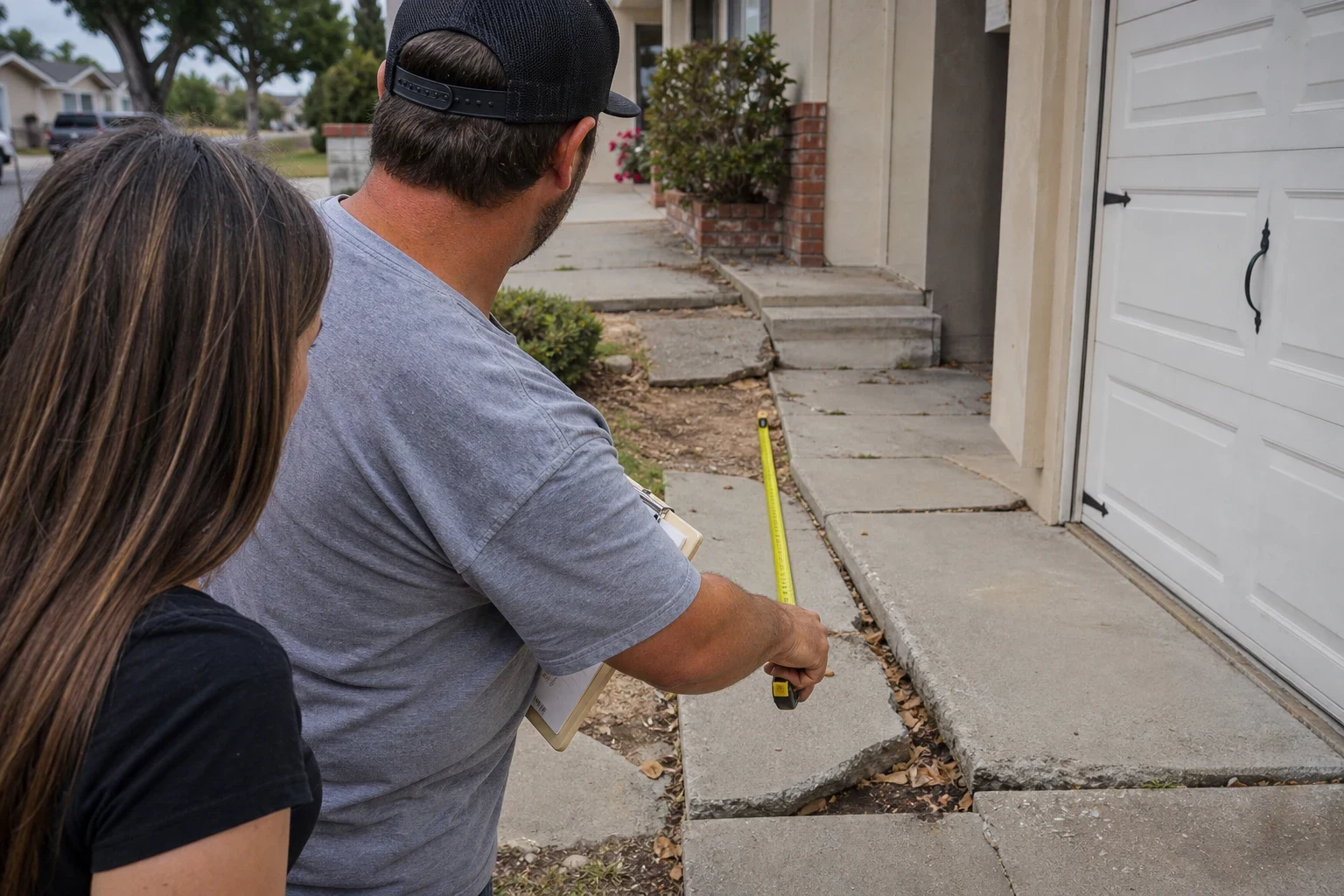
We look at what the slab will carry, check soil and drainage, and note access for the truck or a concrete pump. You get a written estimate with each item listed.
- 2
Permit check and layout
Some slabs need a city permit and some don't, depending on size and use. We confirm that before scheduling, then mark the footprint and grades with you.
- 3
Prep day
Excavation, base compaction, forms, vapor retarder and rebar all happen before any concrete arrives. If an inspection is required, it happens at this stage.
- 4
Pour and finish
The concrete is placed, screeded flat to the forms, floated and broom finished, then the joints are cut. In hot, dry weather or Santa Ana winds we start early so the surface doesn't dry ahead of the slab beneath it.
- 5
Cure and handoff
Curing compound holds moisture in. Foot traffic is fine after a day or two, and we tell you when it's safe to set a shed, spa or equipment.
What sets the price of a slab
Square footage is the starting point, but it rarely tells the whole story. What sits on the slab and what is under it usually move the number more. Your written estimate breaks out each of these so you can see where the money goes.
- Thickness and load
- A pad for a small shed and a pad for a filled spa are built differently. Heavier loads call for more depth, more steel or thickened edges.
- Soil and base depth
- Expansive clay or soft fill means digging deeper and bringing in more aggregate.
- Access
- A side yard that a truck can't reach may need a pump or wheelbarrows, which adds labor and equipment time.
- Removal of old material
- Breaking out and hauling away an existing slab, pavers or a plastic pad is a separate line item.
- Permits and extras
- Permit fees, conduit sleeves for future electrical, or a thickened footing for a structure all add to the total when the job calls for them.
Concrete slab questions
Something not covered here? (714) 733-1781
How thick should my slab be?
Four inches works for most sheds, walkways and equipment pads. Spas, small workshops and anything with concentrated weight often get more depth or thickened edges. We size it after seeing the load and the soil.
Will the slab crack?
Concrete shrinks as it cures, so some cracking is normal. Control joints are there to make it crack in a straight line at the joint instead of randomly across the surface. Good base compaction and steel keep any crack from opening or shifting.
When can I put my hot tub or shed on it?
Light foot traffic is usually fine within a day or two. Heavy loads should wait until the concrete has gained most of its strength, typically around a week, and full strength takes about four weeks. We give you a specific date for your job.
Can you add a conduit for power to the spa or shed?
Yes, we can set a sleeve in the base before the pour so wire can be pulled through later without cutting concrete. The wiring itself is handled by your electrician, and we can place the sleeve where they tell us they need it.
Do I need a permit for a backyard slab?
It depends on the size, location and what will be built on it. Plain flatwork often doesn't need one, while a slab supporting a structure may. We check with the city before we schedule and handle the permit when one is required.
Tell us what the slab needs to hold
Describe the shed, spa or equipment and the spot you have in mind. We'll talk through thickness, base and access, then set a time to measure in Tustin or a nearby town such as Irvine or North Tustin.