ServicesConcrete Courtyards
Concrete Courtyards in Tustin
A courtyard sits close to your walls, windows and doors, so the slab affects how the house drains and how warm those rooms get. We pour courtyard concrete with a proper slope, controlled joints and a finish color chosen to reflect sun instead of soaking it up.
What a Courtyard Slab Has to Do
A courtyard is usually enclosed on two to four sides by the house, a garden wall or a gate. That changes the job. Water has fewer places to go, the concrete runs right up to stucco and door thresholds, and every load of material has to come through a side gate or narrow passage.
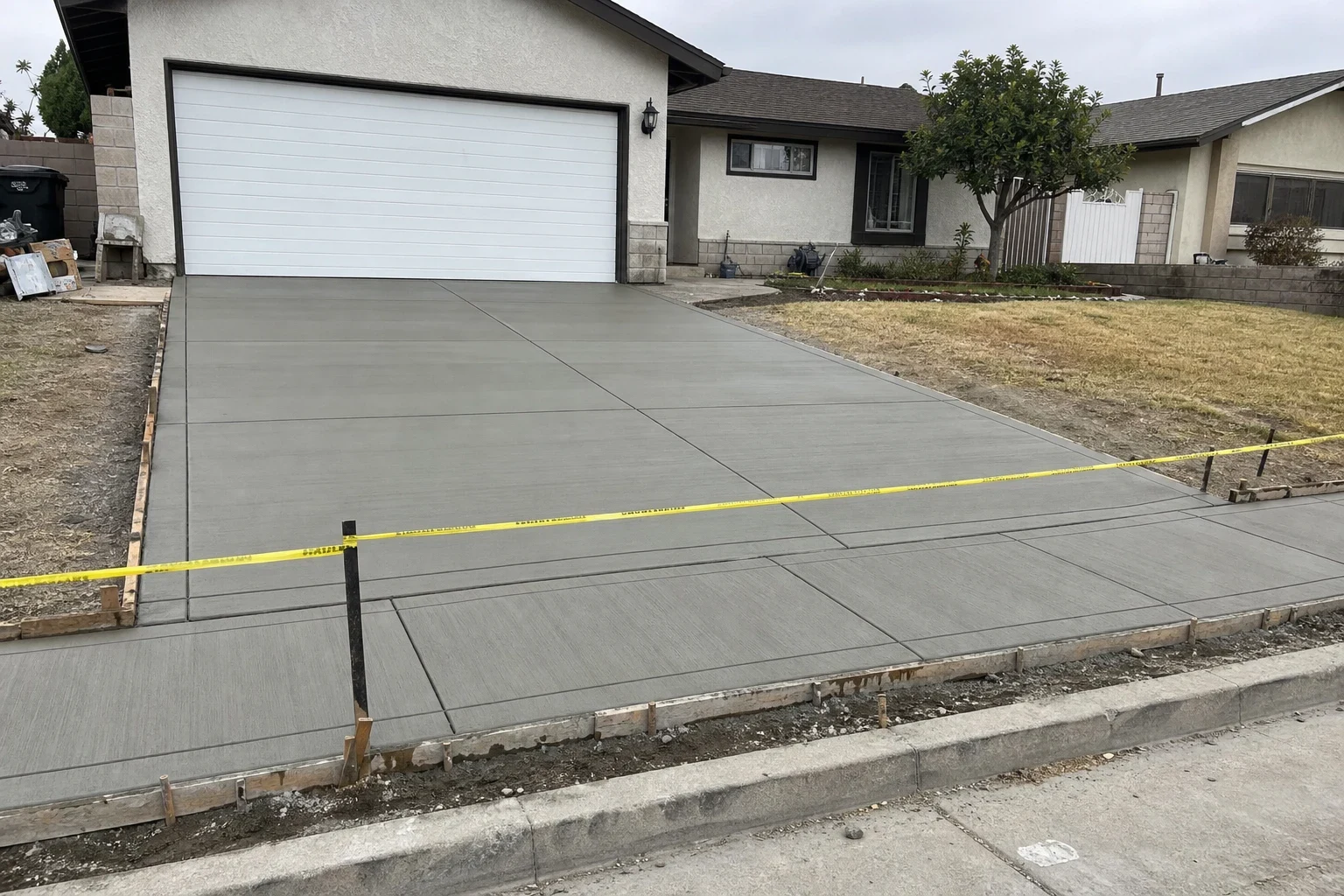
We plan the slab around those limits. The surface falls away from the foundation toward a drain or an open edge, isolation joints separate the new concrete from walls and posts, and the finish is picked for how it handles heat. A gray or tan slab with a broom or light sand finish stays noticeably cooler underfoot than a dark, smooth one, and it radiates less warmth into the rooms that open onto it on summer evenings.
If your project is larger than an enclosed space, our pages on patios and concrete backyards cover open-yard work, and stamped concrete covers decorative patterns.
What Your Courtyard Job Includes
- 01
Removal of the old surface
We break out and haul away existing concrete, pavers, brick or gravel, then dig to the depth the new base needs. Roots and organic soil come out because they compress and leave low spots later.
- 02
Compacted base and grading
Crushed aggregate base goes down in lifts and is compacted with a plate compactor. We set the grade so the finished slab falls roughly a quarter inch per foot away from your walls.
- 03
Drainage tie-ins
Enclosed courtyards often need a channel drain or area drains. We place them before the pour so the concrete is finished flush to the grates, not cut in afterward.
- 04
Reinforcement and joints
Rebar or wire mesh on chairs holds the slab together if it cracks. Control joints are laid out so cracks follow straight lines, and foam isolation strips keep the slab from pushing on stucco, posts or planters.
- 05
Finish and color
Broom, light sand or salt finishes give traction. Integral color in lighter tones keeps the surface cooler than dark pigments and hides dust between rinses.
- 06
Cleanup and cure guidance
We clear forms and debris and leave the space swept. You get clear instructions on when to walk, place furniture and wash the surface.
Questions about Concrete Courtyards?
Call(714) 733-1781Signs Your Courtyard Is Ready for New Concrete
Water sitting against the house
If puddles form at the base of your walls or under a door after rain or irrigation, the surface is sloped the wrong way. Standing water there soaks stucco and can work its way under thresholds.
Pavers or brick that have heaved
Uneven units are a trip hazard and a sign the base below has shifted or washed out. A poured slab on a new compacted base removes the loose joints that let that happen.
A surface too hot to cross barefoot
Dark pavers and asphalt-toned finishes can get very hot by midafternoon. That heat also bounces onto nearby glass and walls, which makes the adjoining rooms work harder to stay cool.
Bare soil or gravel that tracks inside
Dirt and gravel get carried through every door that opens onto the courtyard. A finished slab keeps the floors inside cleaner and gives you usable space year-round.
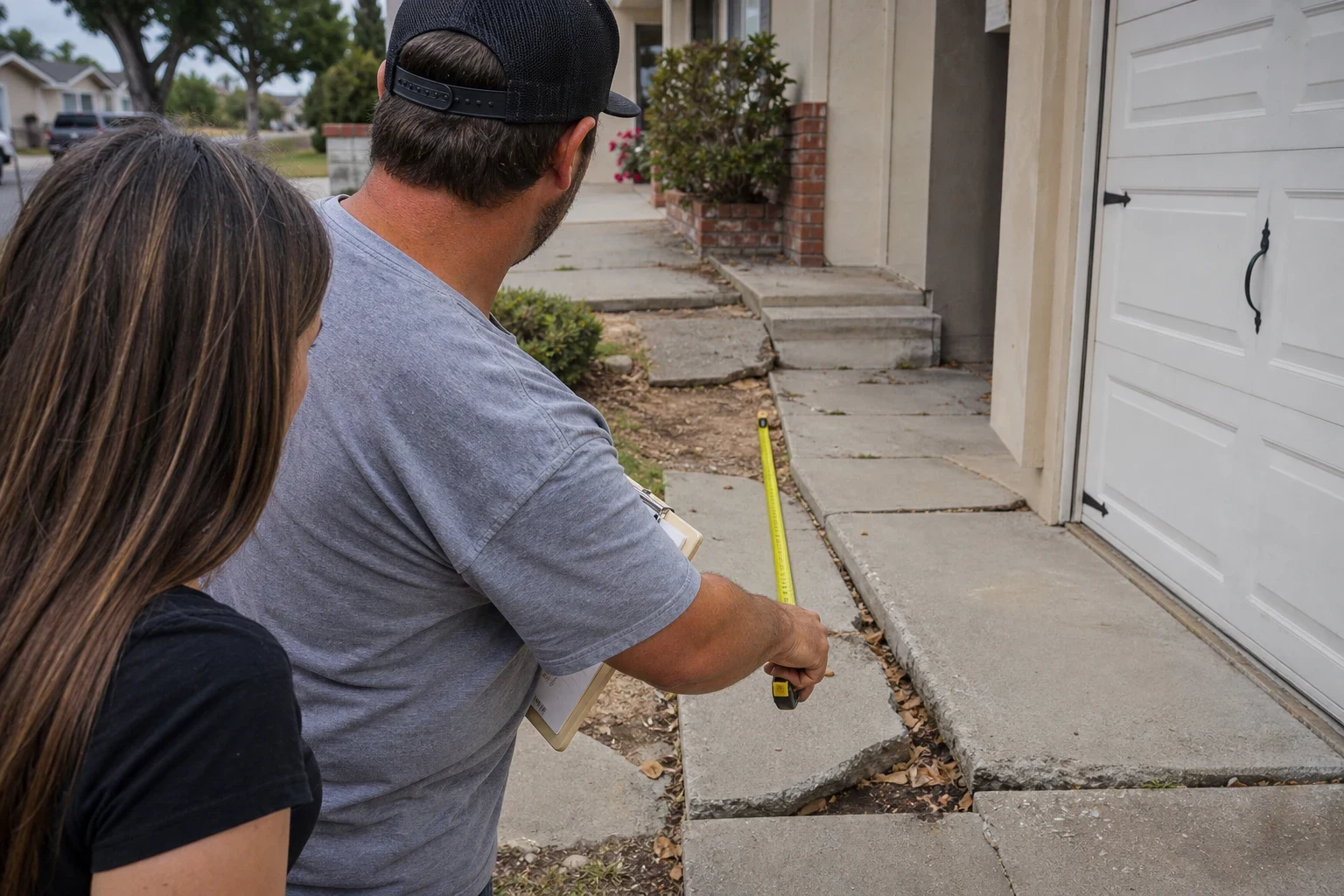
Old concrete with wide, offset cracks
When slab sections have dropped or tipped, replacing the courtyard with a properly based pour is usually the more lasting answer than living with the edges.
How a Courtyard Pour Runs
- 1
Site visit and measurements
We measure the courtyard, check where water currently drains, look at gate width and access, and note door thresholds and weep screeds the new slab must stay below. Then we explain the slope, drain layout and finish options in plain terms.
- 2
Demo, excavation and base
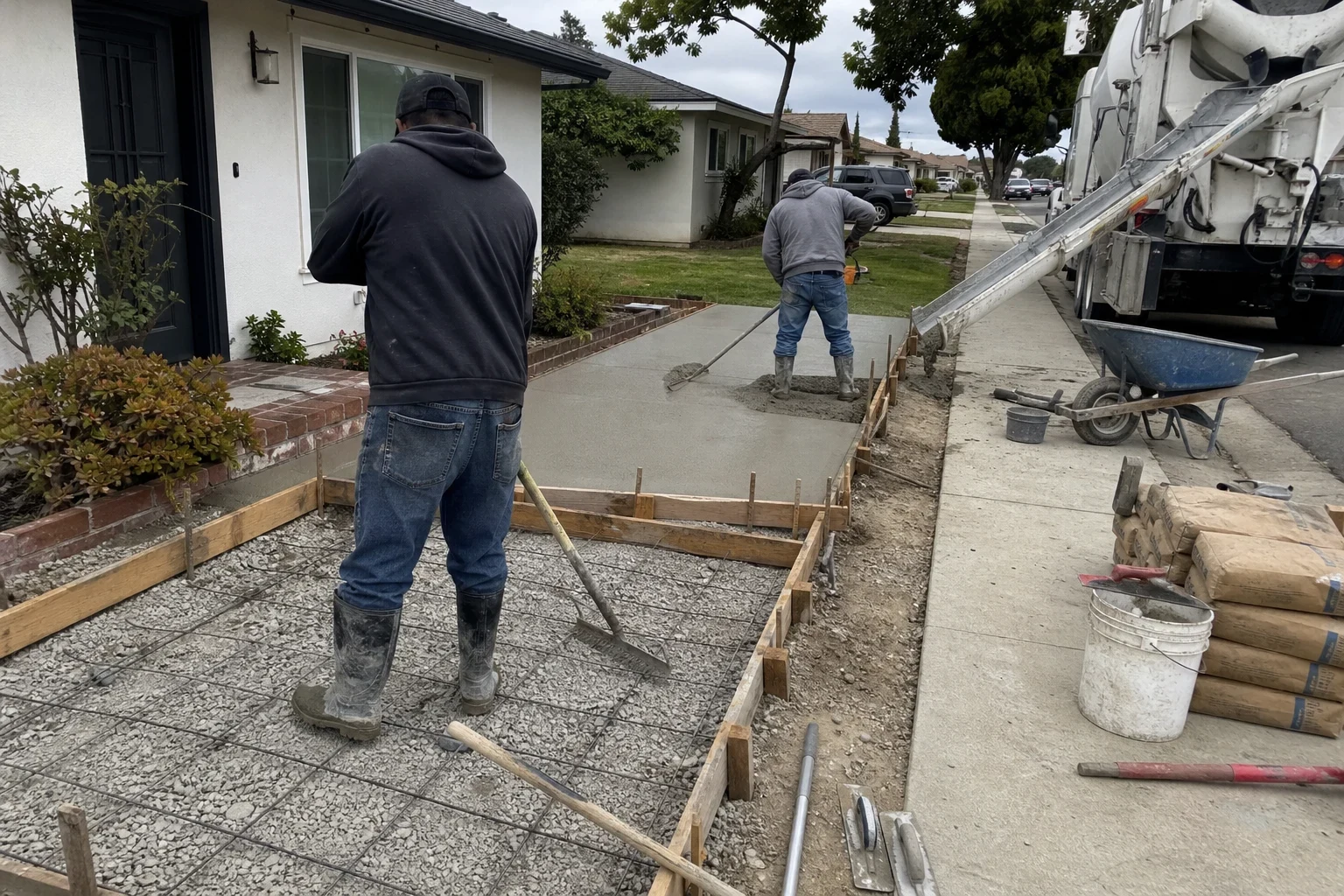
Old material comes out, usually by wheelbarrow or small equipment through the gate. We dig to depth, install and compact the aggregate base, and set any drains.
- 3
Forms, steel and final check
Forms are staked to the planned grade and reinforcement is placed on supports so it ends up in the middle of the slab. We string-check the fall away from the house one last time before ordering concrete.
- 4
Pour and finish
Concrete is placed by wheelbarrow or line pump depending on access, screeded, floated and given the finish you chose. Control joints are tooled or saw-cut the same day or early the next.
- 5
Curing
The slab is kept moist or sealed with a curing compound so it gains strength evenly. Foot traffic is usually fine after a day or two; heavy planters and furniture wait longer.
What Moves the Price of a Courtyard
Courtyards cost more per square foot than an open patio of the same size, mostly because of access and drainage. We give you an itemized estimate by line so you can see where the money goes and decide on options before anything is poured.
- Access through the gate
- A narrow side passage means hand-carrying demolition debris out and bringing concrete in by wheelbarrow or pump hose. More labor hours and pump time raise the cost.
- What comes out first
- Removing an old slab or mortar-set brick takes more time and haul-off than clearing loose gravel or soil.
- Drains and slope corrections
- Adding channel drains, area drains or piping to carry water out of an enclosed space adds materials and labor, and it is often the part that matters most.
- Finish and color
- A plain broom finish is the most economical. Integral color, sand or salt textures and decorative borders add material and finishing time.
- Shape and obstacles
- Curves, planters, posts and multiple door thresholds mean more form work and more careful finishing around edges.
Courtyard Concrete Questions
Will a lighter concrete color really keep the courtyard cooler?
Yes. Lighter gray and tan surfaces reflect more sunlight than dark ones, so the slab heats up less in the afternoon. Because a courtyard is enclosed, less stored heat also means less warmth radiating onto your windows and walls into the evening, which can ease the load on the rooms that face it.
How do you keep water from collecting against my walls?
We grade the base so the finished surface falls away from the house, typically about a quarter inch per foot. Where water has no natural exit, we set channel or area drains before the pour and finish the concrete flush to them. We also keep the slab below weep screeds and door sills so water cannot sit at those openings.
Can you get concrete into a courtyard with only a side gate?
Usually, yes. Smaller jobs are placed by wheelbarrow, and larger ones use a line pump with a hose run through the gate or over a wall. We confirm the access method at the site visit so there are no surprises on pour day.
Do you pour around existing planters and trees?
We can form around planters, posts and tree wells and separate them with isolation joints. For trees, we look at root size and spread first, since large surface roots can lift a slab later, and we tell you plainly if a spot is a poor fit for concrete.
How long until we can use the courtyard?
Walking is usually fine after a day or two. Patio furniture can come back after about a week, and the concrete keeps gaining strength for roughly four weeks. We give you specific timing for your slab based on the weather during the cure.
Plan a Courtyard That Drains Right and Runs Cooler
Tell us the size, how you get into the space and what is there now. We will talk through slope, drains and finish choices and set up a time to measure.