ServicesConcrete Side Yards
Concrete Side Yards in Tustin
We pour side yard slabs that slope water away from your home, sit below the stucco weep screed and give your AC condenser, bins and hose bibs a firm, level surface. You get a clean path that stays dry and needs no watering.
What a Side Yard Slab Actually Fixes
The strip between your house and the property line does more work than it looks like. Roof water lands there, the gas meter and AC unit usually live there, and it is the route for trash bins every week. When it is bare dirt, gravel or patchy grass, water pools against the foundation and the path turns to mud each winter.
A concrete side yard replaces that with a slab graded at least 2 percent away from the wall, which matches what the residential code asks of hard surfaces next to a house. Water heads toward the property line or into a drain instead of soaking the soil under your slab or crawlspace. Drier soil at the foundation means less moisture wicking into the house and fewer damp, musty corners.
There is a running-cost side too. Turf or planted strips in a side yard often get irrigated just to keep the dust down. A slab ends that water use, and a light gray finish stays cooler underfoot than dark pavers or asphalt in summer sun.
What Goes Into the Work
- Removal and grading
- We dig out old gravel, sod, broken pavers or stepping stones and cut the subgrade to a consistent depth. The grade is set so the finished surface falls away from the house along its full length.
- Compacted base
- A layer of crushed aggregate base is placed and compacted with a plate compactor. Orange County clay swells when wet and shrinks when dry, so a firm base under the slab reduces the movement that leads to cracking.
- Weep screed clearance
- Stucco walls have a metal weep screed at the bottom that lets trapped moisture drain out. We set the slab elevation to leave the required clearance below it so the wall can still breathe and water does not get pushed back behind the stucco.
- Drainage tie-ins
- Where the lot is flat or the neighbor's side sits higher, we can add an area drain or a channel drain and connect downspouts to a solid pipe that carries roof water out to the street or a suitable outlet.
- Pad for the AC and utilities
- We form neatly around gas meters, hose bibs, sewer cleanouts and the condenser so each stays accessible. A level surface under the AC unit helps it sit square and keeps dirt and leaves from piling into the coil.
- Joints and finish
- Control joints are cut at regular spacing so shrinkage cracks follow a straight line instead of wandering. A broom finish gives grip when the path is wet.
Signs Your Side Yard Needs Concrete
Standing water after rain
Puddles along the wall that linger a day or more mean the soil is sloped toward your home or not draining at all.
Dirt splashed up the stucco
A brown band at the base of the wall comes from rain bouncing off bare soil. It also means that soil sits too close to the weep screed.
Bins that drag and tip
If wheeling trash cans to the curb means fighting gravel or ruts, a smooth slab fixes that in one step.
Weeds you keep pulling
Narrow side yards are hard to mow and easy to neglect. Weeds and dry grass there also hold moisture against the house.
An AC unit sinking or leaning
A condenser on settled pavers or a small plastic pad can tilt over time. A broader slab around it gives stable footing and a clean area for service visits.
How a Side Yard Job Runs
- 1
Phone call and site look
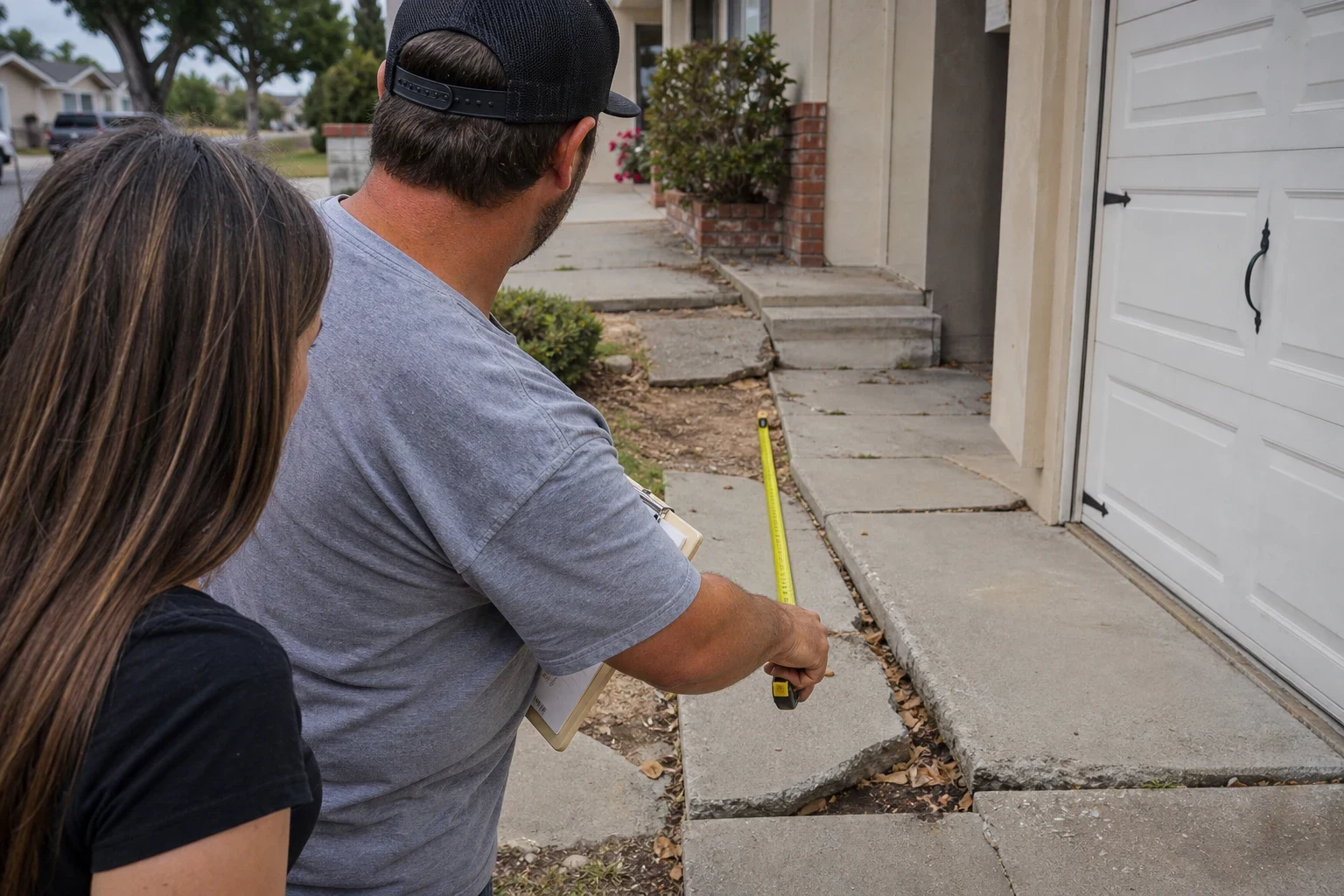
You describe the space by phone and we set a time to see it. We measure the run, check gate width, note where downspouts drop and look at the grade toward the street.
- 2
Written scope
You get a line-item estimate covering demolition, base, drains, concrete and finish, so you can see what each part costs before you decide.
- 3
Prep day
Narrow access usually means wheelbarrows and hand tools. We protect the stucco and any windows with plastic, excavate, compact the base, set forms and install drain lines.
- 4
Pour and finish
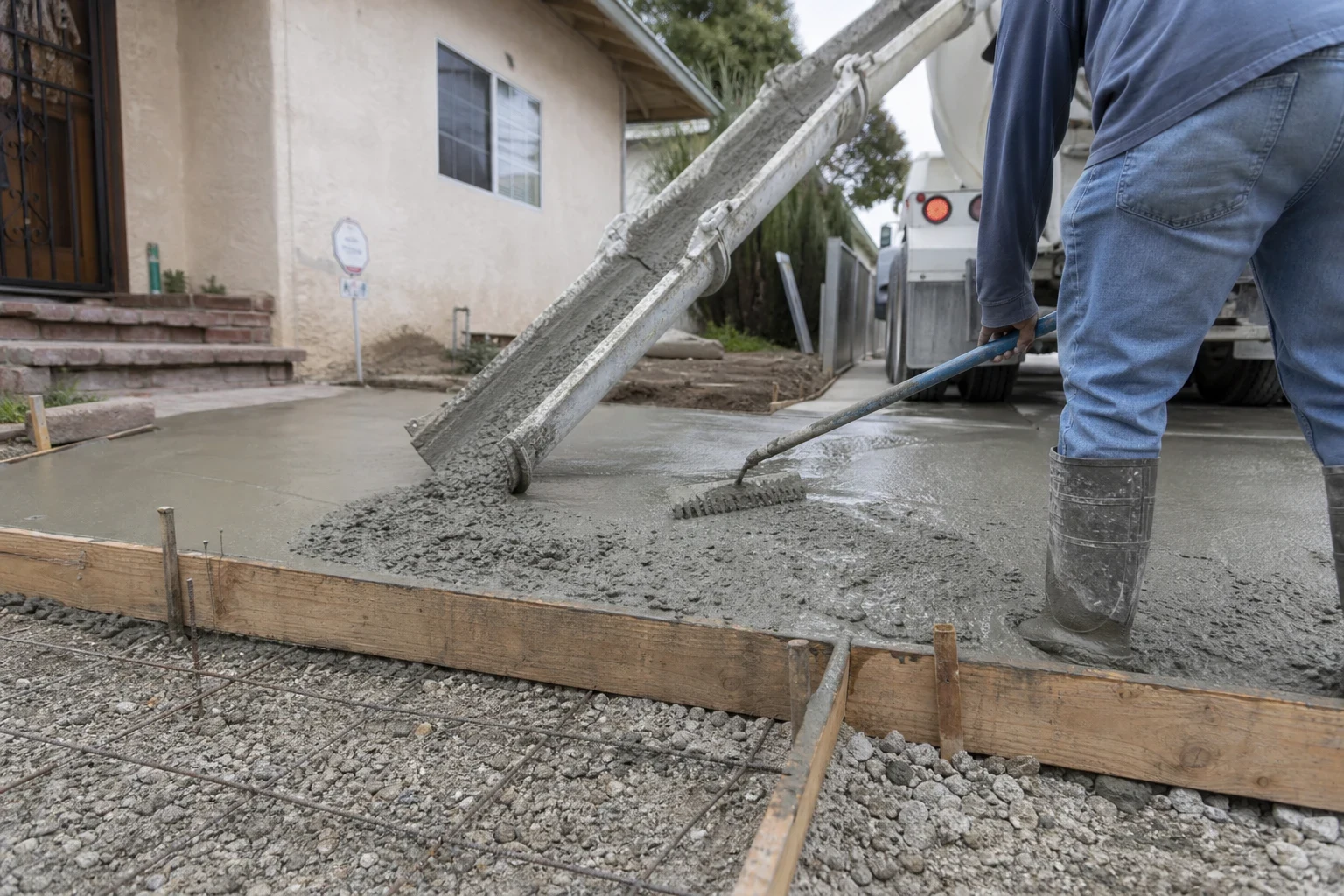
Concrete is placed by wheelbarrow or with a line pump when the truck cannot get close. We screed to the planned slope, finish the edges, broom the surface and cut joints once the slab can take it.
- 5
Cure and cleanup
We haul away soil and debris and rinse the area. You can walk on it after about a day; wait a few more before rolling heavy bins across it.
What Moves the Price
Most side yards are long and narrow, so the price depends less on square footage than on how hard it is to get material in and old material out. We price each job from what we see on site and write every item out separately.
- Access
- A wide gate and short run let us work faster. A tight gate, steps or a long haul from the street adds labor or calls for a concrete pump.
- What comes out first
- Removing gravel is quick. Breaking out old concrete, pavers or tree roots takes more time and more disposal.
- Drainage needs
- A lot that already falls toward the street needs little extra. Flat lots or ones where water arrives from next door may need area drains, channel drains and pipe runs.
- Slope and soil
- Correcting a grade that slopes toward the house, or digging out soft, wet clay to reach firm ground, adds excavation and base material.
Side Yard Questions
Something not covered here? (714) 733-1781
Can the concrete go right up against my house?
It can touch the foundation, but its surface has to stay below the stucco weep screed with proper clearance. Pouring too high blocks the screed and can trap water inside the wall. We check that elevation before we set forms.
What do you do around the AC unit?
We usually pour around it so the condenser stays put on a level surface, or set it on the new slab if it needs to come up. We leave clearance on all sides so airflow and service access are not blocked.
Will a slab make the side of my house hotter?
A standard gray broom finish reflects more sunlight than dark pavers or bare dark soil, so it tends to run cooler. Many side yards are shaded by the neighboring house most of the day anyway, so the effect on the wall is small.
Where will the water go once the dirt is covered?
The slab is sloped away from your home and toward the property line, the street or a drain inlet. On lots that do not fall naturally, we add drains and pipe so water has a defined path off the property.
Do I need a permit for this?
Plain flatwork on your own lot often does not need one, but drainage changes and work near property lines can. We check the requirements with the city before the job and pull a permit when the work calls for it.
Ready for a Dry, Usable Side Yard
Tell us how long the run is, where the gate sits and what is there now. We will set a time to measure and walk you through the drainage plan.