ServicesDriveways
Concrete Driveways in Tustin
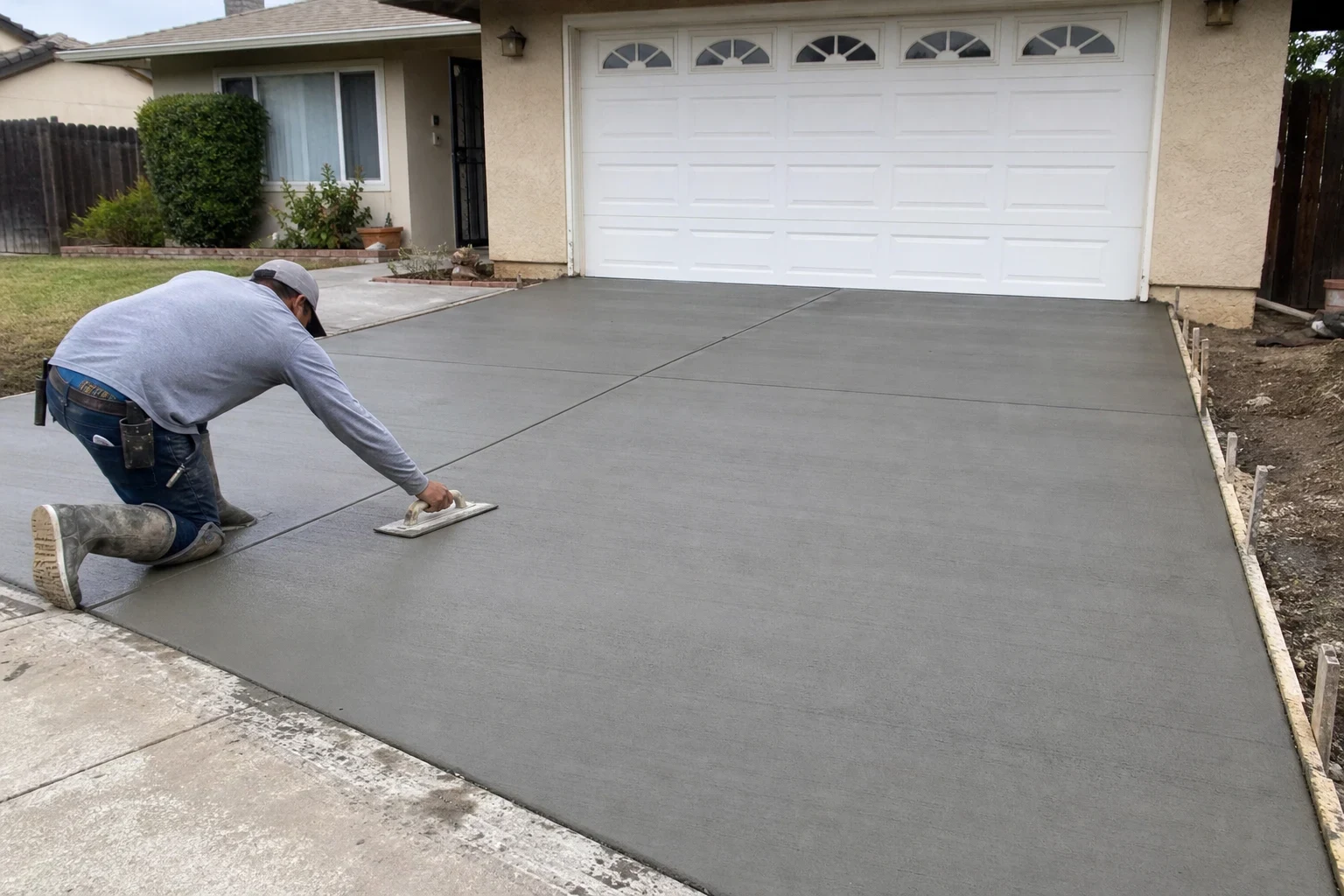
We tear out tired asphalt or cracked concrete and pour a new driveway on a compacted base with steel reinforcement and planned control joints. The result drains away from your home, carries your vehicles without settling, and stays cooler underfoot than dark asphalt.
A new driveway, built from the base up
Most driveway failures start below the surface. When the subgrade was never compacted, or water has been running under the slab for years, the concrete loses support, sinks at the edges and cracks across the middle. Pouring new concrete over that same ground just restarts the clock, so our driveway work begins with the soil.
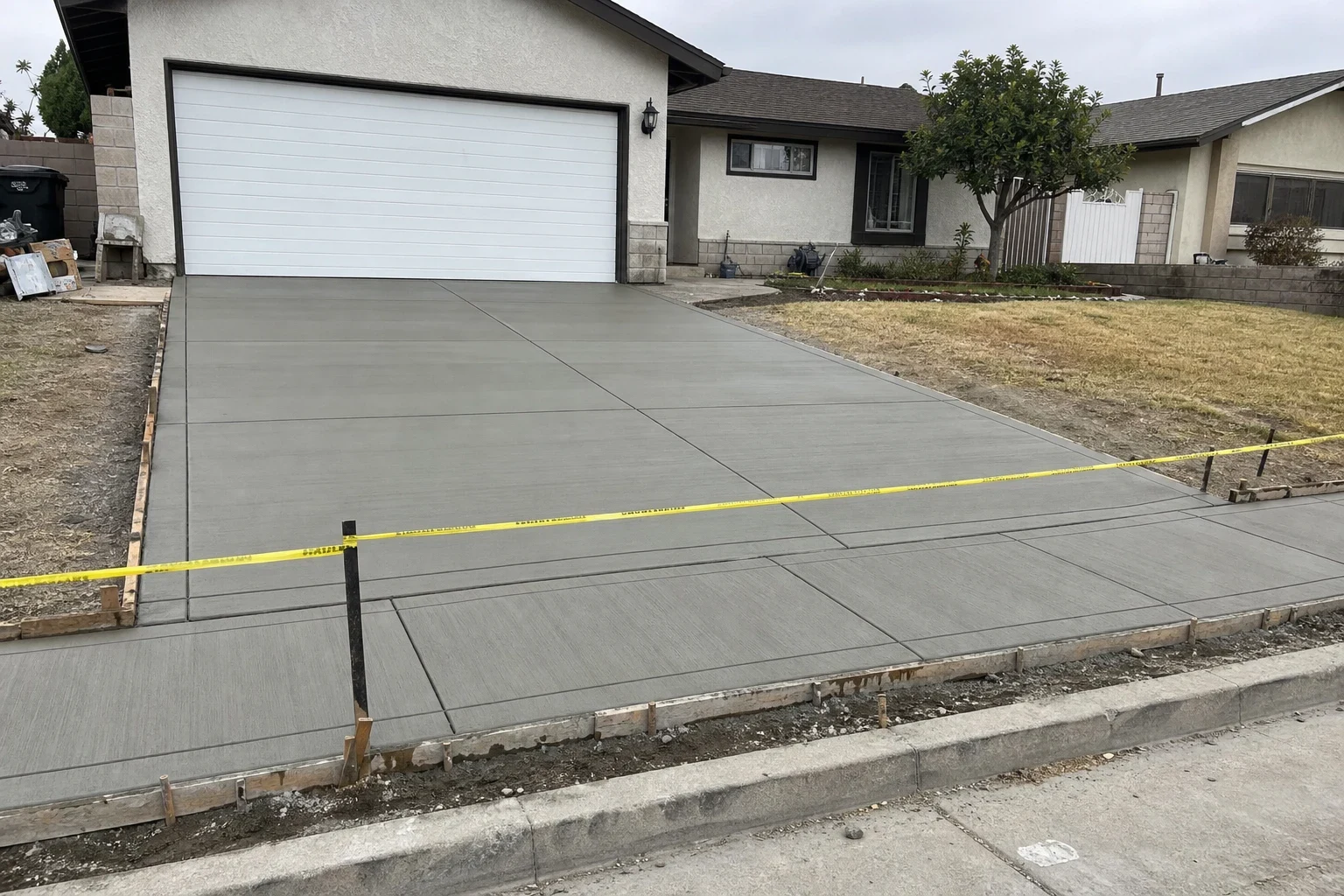
We remove the old surface, correct the grade and compact a layer of crushed aggregate base. The steel grid is propped up off the base so it ends up near the center of the slab's thickness once the concrete is placed, and the mix is sized for vehicle loads. Control joints are cut where the slab wants to crack anyway, so any shrinkage cracking follows a straight line instead of wandering.
There is a comfort benefit too. Light gray concrete reflects far more sunlight than black asphalt, so the surface runs noticeably cooler on summer afternoons and gives off less stored heat toward the garage door and the front of your home in the evening.
What the job includes
- Tear-out and haul-away
- We break up the existing asphalt or concrete, load it out and leave a clean, open subgrade. Old base material that is contaminated with clay or oil gets removed rather than reused.
- Grading and compacted base
- We set the slope so water sheds toward the street or a drain, not toward your garage. Crushed aggregate base is placed in lifts and compacted with a plate compactor so the slab has even support.
- Steel reinforcement
- Rebar is tied in a grid and raised on chairs to sit mid-depth in the slab, where it actually resists cracking. Lying on the dirt, it does almost nothing.
- Forms, pour and finish
- We set forms to your layout, pour, screed, float and give the surface a broom finish for traction. Edges are tooled so they hold up to tires and foot traffic.
- Control and expansion joints
- Joints are cut at spacing matched to slab thickness, and expansion material goes where the driveway meets the garage slab, walkway or curb. That gives the concrete room to move with temperature.
- Permit for the apron
- If the work touches the curb cut or approach in the public right-of-way, the city usually requires a permit and an inspection. We pull it and schedule the inspection as part of the job.
Signs your driveway is ready to be replaced
Cracks that keep widening
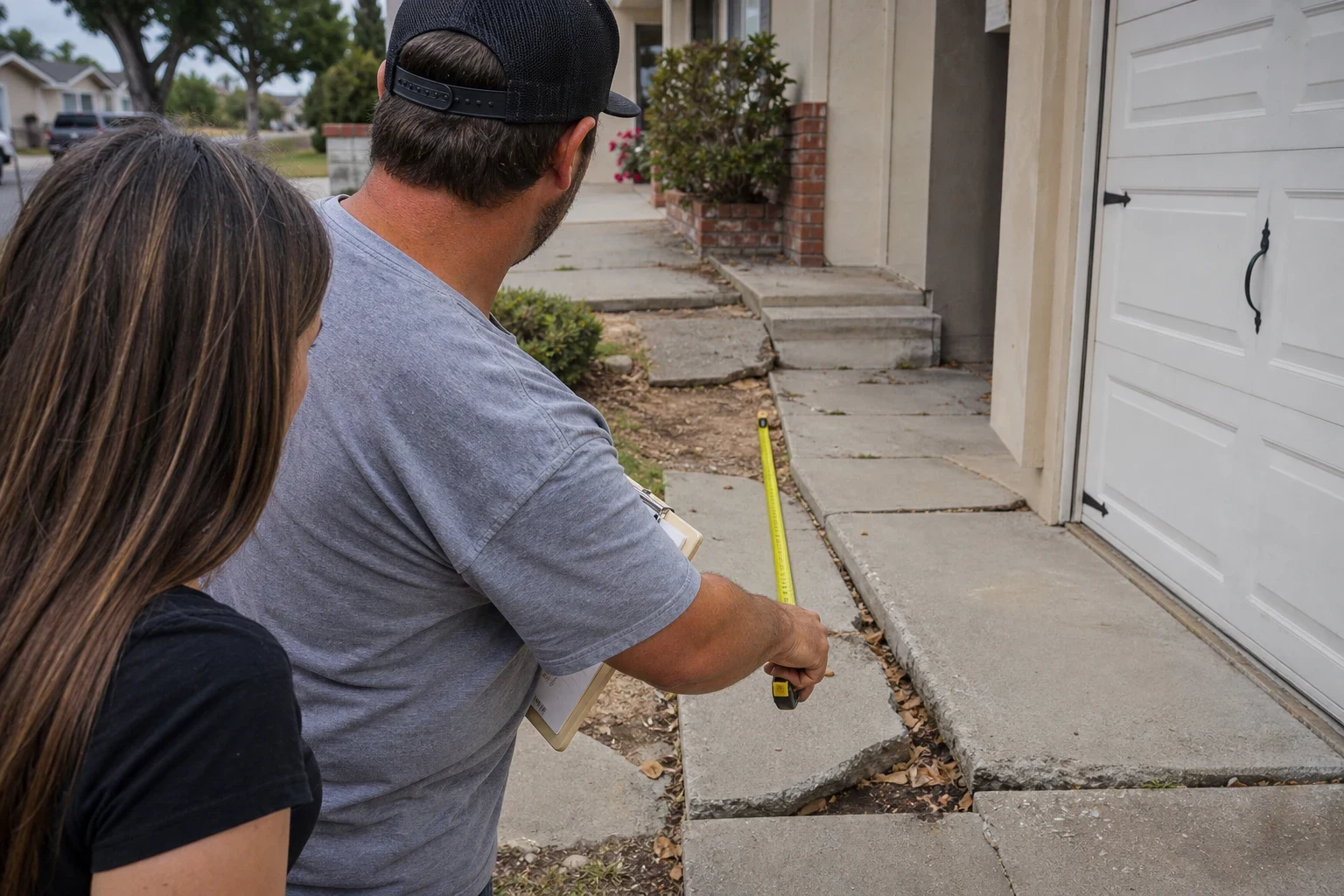
Hairline shrinkage cracks are normal. Cracks you can fit a coin into, or ones where one side sits higher than the other, mean the base underneath has moved.
Water pooling near the garage
Sunken sections that hold water after rain or irrigation are pushing moisture toward your foundation and garage slab instead of away from it.
Root heave
Tree roots lift slabs into trip edges and break them into pieces. Replacement lets us cut back or reroute around the problem before the new pour.
Soft, crumbling asphalt
Old asphalt softens in summer heat, ruts under tires and breaks down into loose gravel at the edges. Its dark surface also soaks up heat all afternoon.
Flaking surface
Scaling and spalling, where the top layer peels away, usually point to a weak original mix or a poor finish. Patching rarely bonds well to a surface in that condition.
How a driveway job runs
- 1
Phone call and site visit
You call, describe the driveway and what bothers you about it, and we set a time to come out. On site we measure, check the slope and drainage, and look at access for the equipment.
- 2
Written estimate
You get a line-item estimate covering demolition, base, reinforcement, concrete, finish and any permit. If we find soft soil or roots, we show you photos and explain what it changes.
- 3
Demolition and prep day
We protect the garage door, landscaping and walkways, then tear out, haul, grade and compact. Forms and rebar go in, and if a permit applies, the inspection happens before the pour.
- 4
Pour day
The truck arrives, we place and finish the concrete, then cut joints once the surface can take a saw. We clean up the street and your yard before we leave.
- 5
Curing and first use
Foot traffic is fine after a day or two. Keep cars off for about a week, and heavier vehicles longer, so the slab gains strength before it carries load.
What sets the price of a driveway
Driveway pricing comes down to how much ground we cover, what has to come out first, and what goes under and into the slab. We price each line separately so you can see where the money goes and which choices change it.
- Size and thickness
- Square footage drives the concrete order and labor. A driveway that carries trucks or an RV needs a thicker slab and more steel than one for two sedans.
- Demolition and disposal
- Removing thick concrete with old rebar takes more time and dump weight than thin asphalt. Leftover base that has to be dug out adds to the haul.
- Soil and drainage corrections
- Clay soils common across Orange County swell when wet and shrink when dry. Over-excavating soft spots, adding base or installing a channel drain all add cost but protect the new slab.
- Finish and layout
- A plain broom finish costs the least. Curves, colored concrete, borders or a stamped concrete band take more forming and labor.
- Access and permits
- Tight access can mean a pump or extra handwork. An apron permit adds fees and an inspection step to the schedule.
Driveway questions we hear often
Something not covered here? (714) 733-1781
How long until I can park on the new driveway?
Plan on about seven days before parking passenger cars. Concrete keeps gaining strength for weeks, so heavier vehicles should wait longer. We will give you the exact timing for your slab on pour day.
Will a concrete driveway crack?
Concrete shrinks as it cures, so some fine cracking is normal. Our job is to control where it happens: a compacted base, mid-depth rebar and properly spaced control joints keep cracks in the joints and keep the slab level.
Is concrete really cooler than asphalt?
Yes. Fresh concrete reflects a much larger share of sunlight than black asphalt, so it stays cooler to walk on and stores less heat. That means less warmth radiating toward your garage and front rooms on hot evenings.
Can you widen the driveway while you replace it?
Usually. Widening on your property is straightforward. Widening the curb cut at the street involves the city, and we handle that permit when it applies.
Do I need to be home during the work?
Not for the whole job. We like to walk the layout with you before demolition and again after the pour. The garage will be blocked during the work, so plan to park on the street.
Ready to replace your driveway
Tell us the size, what is there now and what you park on it. We will set up a site visit and give you a written, line-item estimate.