ServicesStamped Concrete
Stamped Concrete in Tustin
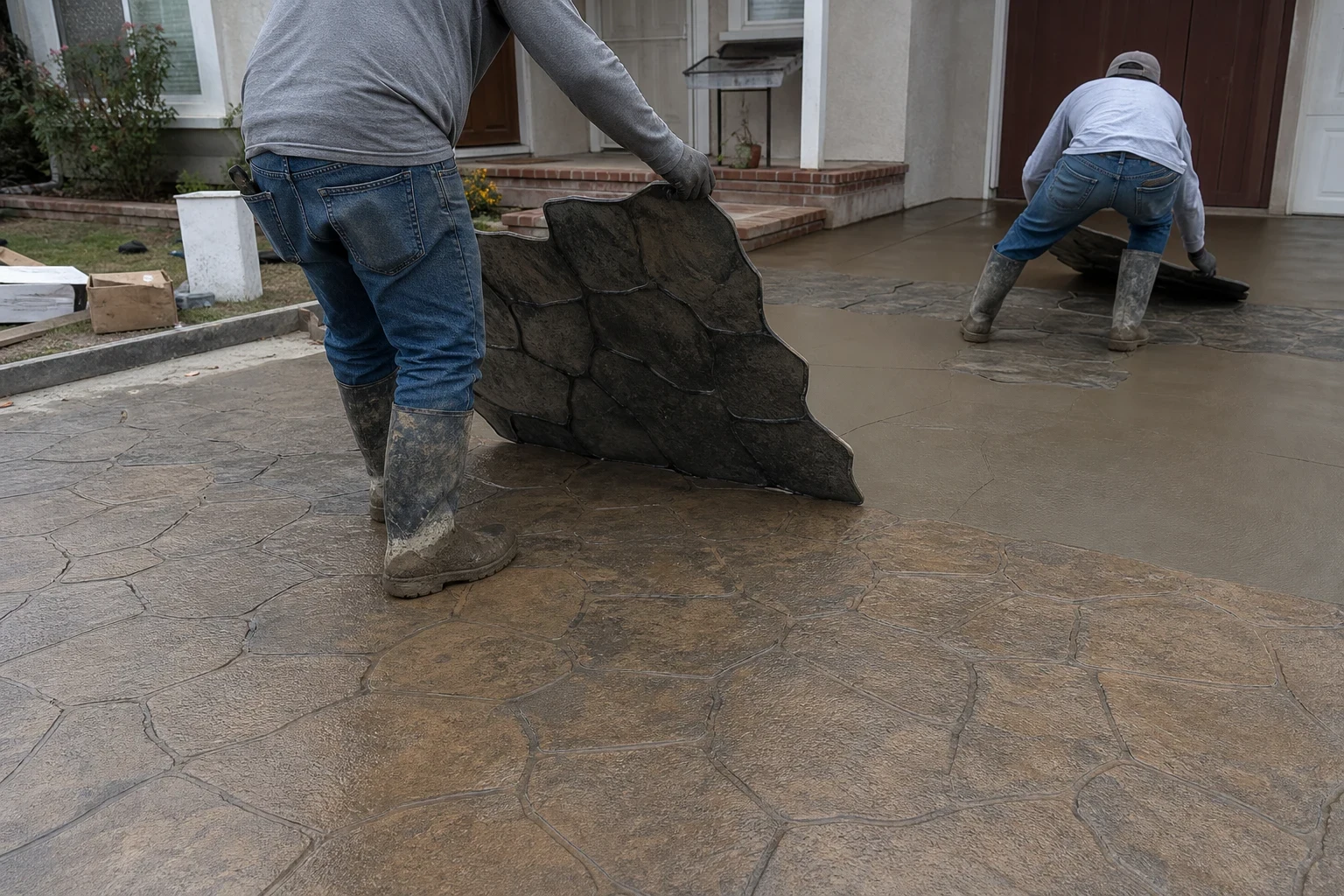
We pour and stamp concrete that looks like slate, flagstone, brick or wood plank, built on a compacted base with color mixed through the slab. Lighter tones and the right sealer keep the surface cooler underfoot near your home.
What Stamped Concrete Is and When It Fits
Stamped concrete is a standard slab that we texture with polyurethane mats while the surface is still plastic. Color comes from integral pigment in the mix, a dry-shake color hardener troweled into the top, or both. A release agent keeps the mats from sticking and leaves darker antiquing in the low spots, which is what makes the pattern read as stone instead of poured concrete.
It is the right call when you want the look of pavers or natural stone on a patio, walkway, courtyard or driveway but prefer a single monolithic surface with no joints for weeds or ants. It is less suited to steep slopes or spots that need a very fine broom texture for traction, and we will tell you so at the site visit.
Color choice matters more than most people expect. A light sandstone or buff tone reflects much more sunlight than charcoal or deep red, so the slab stays more comfortable for bare feet and sheds less stored heat against nearby walls and sliding doors in the evening.
What Our Stamped Concrete Work Includes
- 01
Excavation and base prep
We remove old concrete, turf or soil to grade, then place and compact a crushed aggregate base. Most stamped cracking traces back to a soft or uneven subgrade, so this step gets the most time.
- 02
Reinforcement and forms
Rebar on chairs or welded wire sits mid-depth in the slab, not on the dirt. Forms are set to slope water away from your home at a steady fall.
- 03
Color system
We use integral color, color hardener or a combination, depending on the look and how much wear the surface sees. Hardener adds surface density, which helps on driveways.
- 04
Pattern and texture stamping
We stamp with full mats and flexible skins at the edges so the texture runs cleanly to the forms and steps. Joints are cut to fall along pattern lines where possible, so they disappear into the design.
- 05
Sealer and slip resistance
After cure, we wash off the release agent and apply a sealer. Around pools and on walks we can broadcast a grit additive into the sealer for better footing when wet.
Questions about Stamped Concrete?
Call(714) 733-1781Signs Stamped Concrete Is a Good Next Step
Plain gray slab that bakes in summer
An old dark or weathered slab outside west-facing windows can radiate heat well after sunset. A new stamped surface in a lighter tone reflects more of that afternoon sun.
Pavers that keep shifting
Settled pavers, weeds in the joints and ant mounds in the sand bed point to a surface that needs constant attention. A stamped slab gives a similar look as one piece.
A remodel that needs a matching finish
If you are adding a patio, courtyard or entry walk, stamping lets you match stone or tile tones already on the house.
Worn-out, low-traction surfaces
Smooth, polished old concrete gets slick near hoses and sprinklers. A textured stamp with sealer grit gives your feet something to grip.
How a Stamped Concrete Job Runs
- 1
Site visit and layout
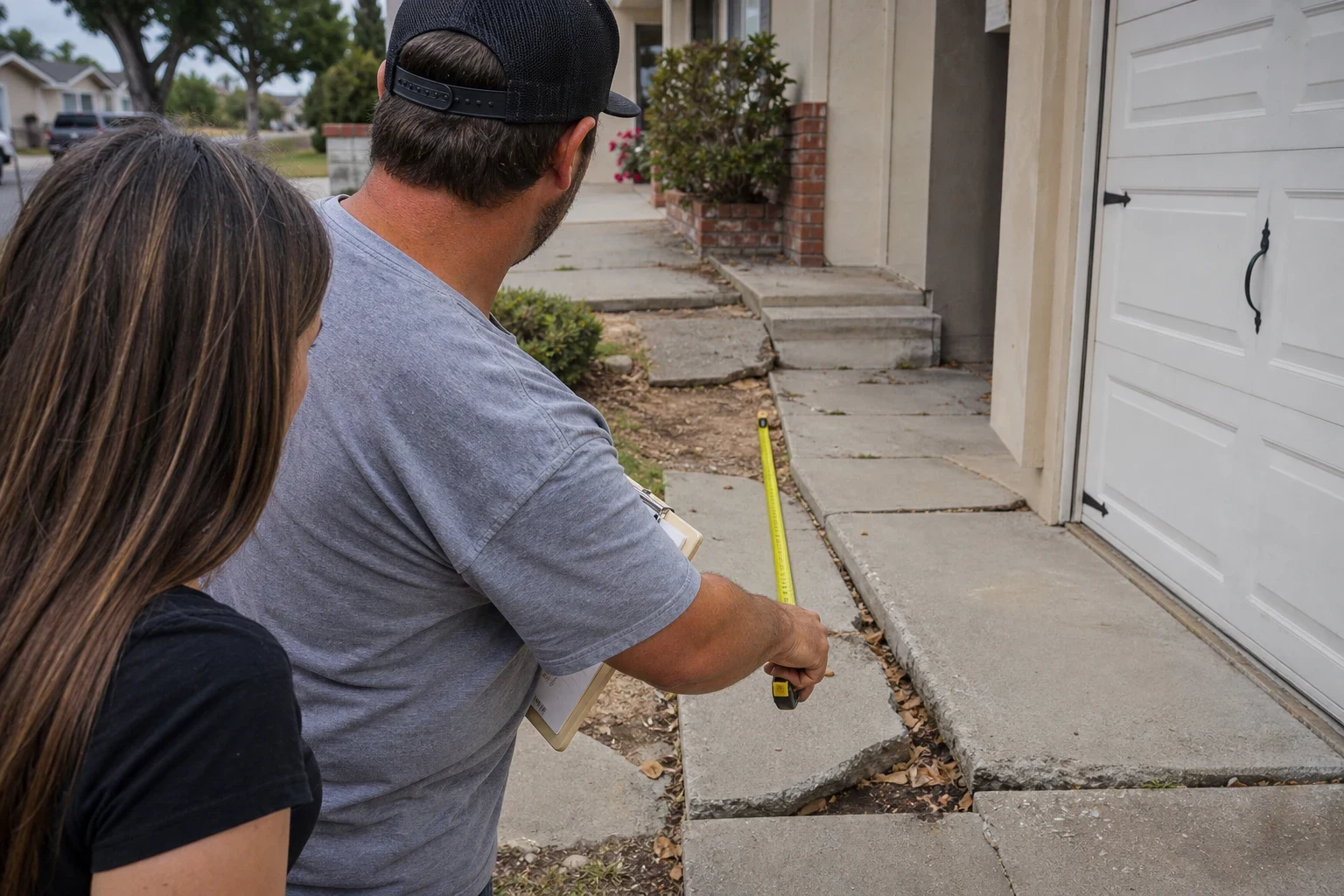
We measure, check drainage paths and soil, and walk you through pattern mats and color samples in daylight. You get a written estimate that lists each line item.
- 2
Demo, grading and base
Removal and base compaction usually take a day or two depending on size and access. Forms and reinforcement go in after the base is set.
- 3
Pour and stamp day
Timing is everything here. We pour, screed, apply color hardener and release, then stamp as soon as the surface takes a mat. On hot or windy days, common during Santa Ana conditions, we start early and use evaporation retarder so the top does not set before we finish.
- 4
Joint cutting and cleanup
Control joints are cut within the first day to guide shrinkage cracks. We haul debris and leave the site broom clean.
- 5
Wash and seal
Once the slab has cured enough, we pressure wash excess release and roll on the sealer. Foot traffic is usually fine within a few days; vehicles need longer, and we give you the timeline for your mix.
What Affects the Cost of Stamped Concrete
Stamped work costs more than broom finish because of the extra materials and the crew needed to stamp before the concrete sets. We price each job from the site, and the written estimate shows where each part of the cost comes from.
- Square footage and shape
- Larger, simple rectangles cost less per foot than small areas with curves, steps and many edges that need hand texturing.
- Pattern and color layers
- A single color with one release tone is the simplest. Multiple colors, hand-applied antiquing or borders in a contrasting pattern add labor.
- Removal and access
- Breaking out an old slab and hauling it, or wheelbarrowing concrete through a narrow side yard, adds time compared with open access for the truck or a pump.
- Slab thickness and use
- A driveway needs more depth and reinforcement than a walkway, which changes material quantities.
- Sealer and grit
- Solvent-based acrylics, water-based sealers and slip additives differ in cost and in how often you will reseal.
Stamped Concrete Questions
Will stamped concrete crack?
All concrete shrinks as it cures, so hairline cracks are possible. We place control joints to guide that movement along pattern lines and reinforce the slab mid-depth. A well-compacted base keeps cracks small and tight.
Does stamped concrete get hot?
Any concrete in full sun warms up, but color drives how much. Light tones like buff, sand or light gray stay noticeably cooler than charcoal or brick red. We can show you samples side by side before you choose.
How often does it need resealing?
Most stamped surfaces in full sun benefit from a fresh coat of sealer every two to three years. Resealing protects the color from UV fade and keeps stains from soaking in. You can see it is time when water stops beading and the color looks dull.
Is stamped concrete slippery when wet?
Sealer can make it slick, especially on smoother patterns. Choosing a deeper texture and adding a grit additive to the sealer improves traction. We recommend both near pools and on sloped walks.
Can you match the stamped patio to a new walkway later?
We keep a record of the mix, color and pattern we used so a later pour can come close. Concrete color shifts slightly between batches and with age, so we usually suggest a border or joint between the two pours.
Plan Your Stamped Concrete Project
Tell us where the slab will go, how you plan to use it and which looks you like. We will set up a site visit, bring color samples and give you a written estimate.