ServicesRV Parking Pads
Concrete RV Parking Pads in Tustin
We build RV parking pads with a compacted base, steel reinforcement and a thicker slab than a walkway or patio, so a loaded motorhome or trailer sits level on concrete instead of sinking into soil. Water sheets off toward a drain, not toward your home.
A slab built for tons, not foot traffic
An RV parking pad is a reinforced concrete slab sized and built for the weight of a motorhome, travel trailer or boat. A loaded rig puts its whole weight on a few small tire patches, and a standard 4-inch patio slab poured over loose soil is not designed for that point load. We pour pads thicker, set the steel at mid-depth and compact the base under them, so the concrete spreads the weight instead of the ground beneath it taking it.
Level matters once the rig is parked. Many RV absorption refrigerators cool poorly when they sit off level, and leveling jacks and slide-outs work harder on a slope. We pour the pad flat side to side with only enough fall end to end to shed water. You spend less time on blocks and jacks, and the fridge runs the way it was designed to.
Light gray concrete also reflects more summer sun than asphalt or bare dirt. A pad along the side of your home stays cooler underfoot and sends less heat back toward that wall than a dark surface would.
What goes into an RV pad we pour
Layout around your rig
We measure the RV, the gate opening and the path from the street. We check turning room, overhead clearance from eaves and trees, and how far the pad sits from the property line before any digging starts.
Excavation and compacted base
Sod and organic topsoil come out because they compress under load. We compact the subgrade, then place crushed aggregate base and compact it in lifts. Clay soils swell when wet and shrink when dry, and a solid base limits how much of that movement reaches the slab.
Thicker slab with rebar
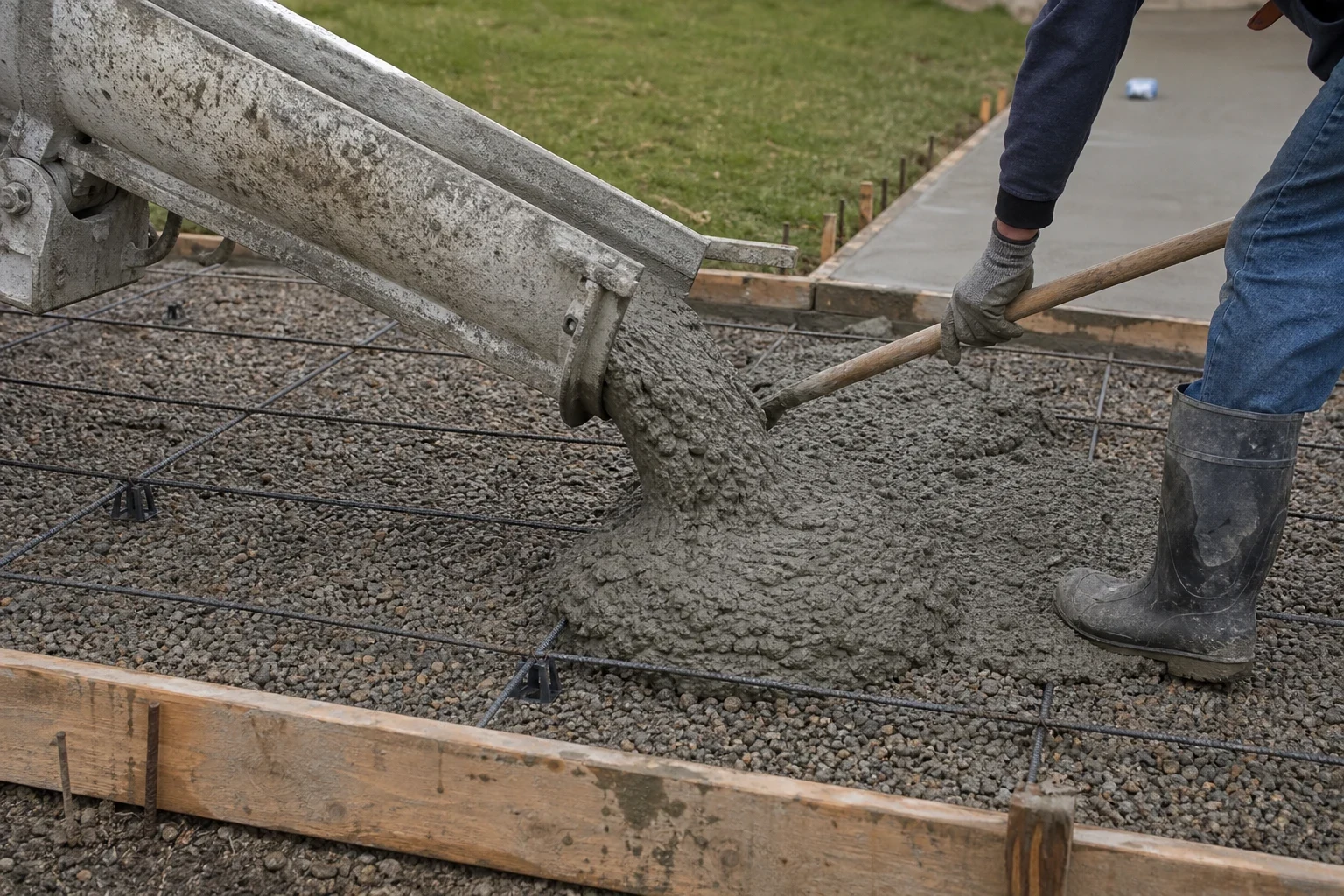
RV pads are typically poured 5 to 6 inches thick, with a rebar grid held up on chairs so it ends up inside the concrete rather than lying in the dirt. Edges where tires roll on can be thickened for extra support.
Slope and drainage
We grade the pad so rain and wash water run away from your foundation and toward landscaping, the street or a channel drain. Standing water under a parked rig keeps tires and the undercarriage damp.
Control joints and finish
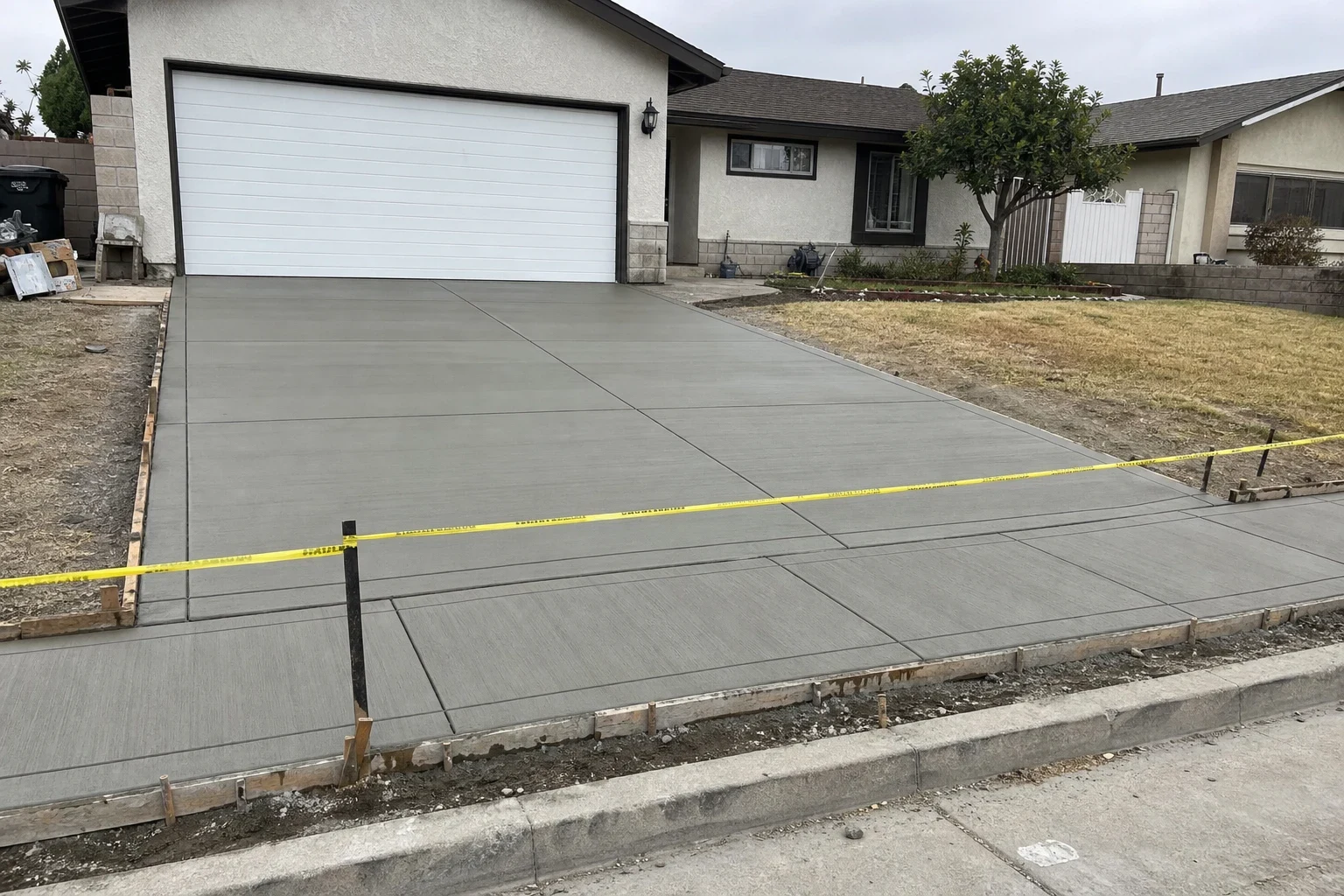
Joints are cut to about a quarter of the slab depth so shrinkage cracks follow a straight line instead of wandering. A broom finish gives traction when the surface is wet, or we can match an existing driveway.
Sleeves for future utilities
Before the pour we can set PVC sleeves under the slab. Later, an electrician can pull a shore-power line or a plumber can run water to the pad without anyone cutting concrete.
Signs it is time for a proper RV pad
Tires are settling into the ground
Lawn, decomposed granite and loose gravel all compress under a parked rig. Once one tire sinks lower than the others, the frame and leveling gear take the strain.
You re-level every time you park
If you stack blocks or run the jacks after every trip, the surface is the problem. A flat pad sets the rig level the moment it stops.
Ruts, mud and dead grass
Gravel pads rut where the tires turn, and mud tracks into the RV and your home after rain. Grass under a parked rig dies, and the sprinklers keep watering it anyway.
You pay to store it elsewhere
Monthly storage fees and trips across town to load up add up over a year. A pad at your home cuts both, where city and HOA rules allow it.
The slab you have was built for something lighter
A thin walkway or patio slab was never meant to carry an RV. We remove it and pour a new pad built for the load.
How an RV pad job runs
- 1
Site visit and measurements
We look at the rig, the access route, the soil and where water goes now. Then we walk you through the slab thickness, size and drainage we recommend and why.
- 2
Permits and utility marking
If the job needs a new curb cut or driveway approach, that usually means a city permit, and we pull it. We also have underground utilities marked before excavation.
- 3
Dig, base, forms and steel
Excavation, base compaction, forms and rebar usually take a day or two depending on size and access. You can see the steel and form grades before any concrete arrives.
- 4
Pour and finish
We place the concrete, screed it to the forms, float and broom it, then cut control joints at the right time. Your home's walls, gate and landscaping are protected, and we clean up the site when we leave.
- 5
Cure, then park
Concrete gains strength for weeks after the pour. We give you a specific wait time before the RV rolls on, based on the mix and the weather, and it is usually longer than for a car.
What moves the price of an RV pad
We price each RV pad from measurements taken on your property, so a number comes after we walk the site. Most of the cost follows two things: the volume of concrete and rebar the pad calls for, and how easily material reaches the spot where the rig will park. Your estimate is written and broken out line by line, so every part of the job carries its own figure.
- Pad length, width and slab depth
- A longer motorhome or trailer needs a longer slab, and every added inch of depth means more concrete over the entire footprint. Leaving clearance for slide-outs widens the pad.
- Getting material in and old material out
- When a narrow side yard keeps the truck at the curb, we may need a concrete pump or wheelbarrows to place the mix. Breaking up an old slab or gravel bed and hauling it off adds labor and disposal fees.
- Ground conditions under the base
- Clay-heavy or soft soil can call for digging deeper and placing more compacted aggregate before the forms go up.
- Drainage, sleeves and street work
- A channel drain, PVC utility sleeves, a new curb cut and city permit fees each show up as a separate line. Matching a decorative driveway finish runs higher than a plain broom finish.
RV pad questions we hear often
Something not covered here? (714) 733-1781
How thick should a concrete RV pad be?
Most RV pads we pour are 5 to 6 inches thick with rebar, over a compacted aggregate base. Heavier motorhomes or softer soil can call for the thicker end of that range or thickened edges. We size it to your rig and your ground, not to a standard number.
How big should the pad be?
We usually add a couple of feet beyond the rig's length and leave room on the sides for slide-outs, steps and walking around it. Bring the length and width of your RV to the site visit, and we will lay out the pad with you.
Do I need a permit for an RV pad in Tustin?
It depends on the work. A new driveway approach or curb cut typically needs a city permit, and setback rules and HOA guidelines can affect where a pad may go. We check what your project needs and pull the permit when one is required.
How long before I can park the RV on it?
Longer than for a car, because an RV is much heavier. We give you a specific wait based on the mix and the weather at the time of the pour. Keeping the rig off until then lets the slab reach the strength it was designed for.
Can the pad match my existing driveway?
Yes. We can extend the look of your current concrete, or pair the pad with new work on our Driveways or Stamped Concrete pages. If the pad runs down the side of your home, our Concrete Side Yards page covers that layout too.
Get the RV off the dirt and onto a level pad
Tell us about your rig and where it needs to park. We will talk through the size, thickness and drainage your pad needs and set up a time to look at the site.