ServicesGarage Floors
Concrete Garage Floors in Tustin
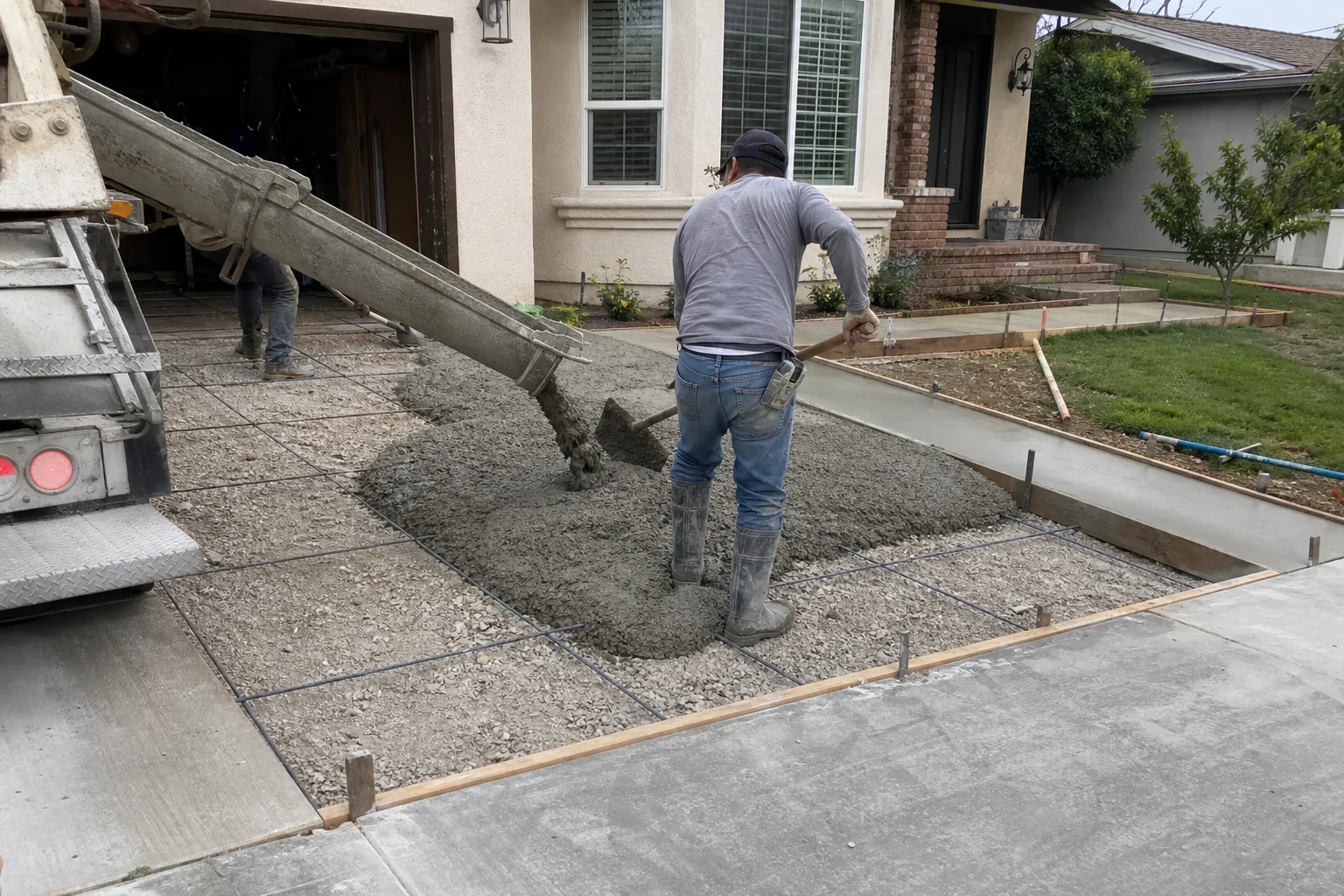
We tear out worn, sunken or heaved garage slabs and pour a new floor from the ground up. That means a compacted base, a vapor retarder, steel in the slab and joints cut where cracks should go, so your floor stays flat and dry.
A New Slab, Built From the Base Up
Most garage floors fail from below. Soil under the slab was never compacted, water found its way underneath, or clay-heavy ground swelled and shrank until the concrete cracked and dropped. Patching the top does nothing about that, so our garage floor work is a full replacement: remove the old slab, correct the base and pour new concrete.
A garage floor also does more for your home than hold up a car. When the slab sinks near the door, the bottom seal on the garage door can't close against it, and heat, dust and pests come through the gap. A level threshold lets that seal do its job. If you use the garage as a gym or workshop, a vapor retarder under the slab keeps ground moisture from wicking up, which means less dampness, less musty air and a floor that takes coatings well later.
What the Work Includes
- Saw-cut and removal
- We saw-cut the slab at the edges so the foundation and driveway stay intact, break out the old concrete and haul it away. The debris leaves with us.
- Subgrade and base prep
- We excavate soft or contaminated soil, then place and compact crushed aggregate base in lifts. A firm, even base is what keeps a new slab from settling the way the old one did.
- Vapor retarder
- A polyethylene vapor retarder goes over the base with seams overlapped and taped. It slows the moisture that would otherwise rise through the concrete and lift paint, epoxy or stored boxes.
- Reinforcement
- Rebar is tied in a grid and raised on plastic supports, which puts the steel near mid-depth once the concrete is placed. Steel resting on the base does almost nothing to hold cracks together, so its height matters as much as its spacing.
- Slope and joints
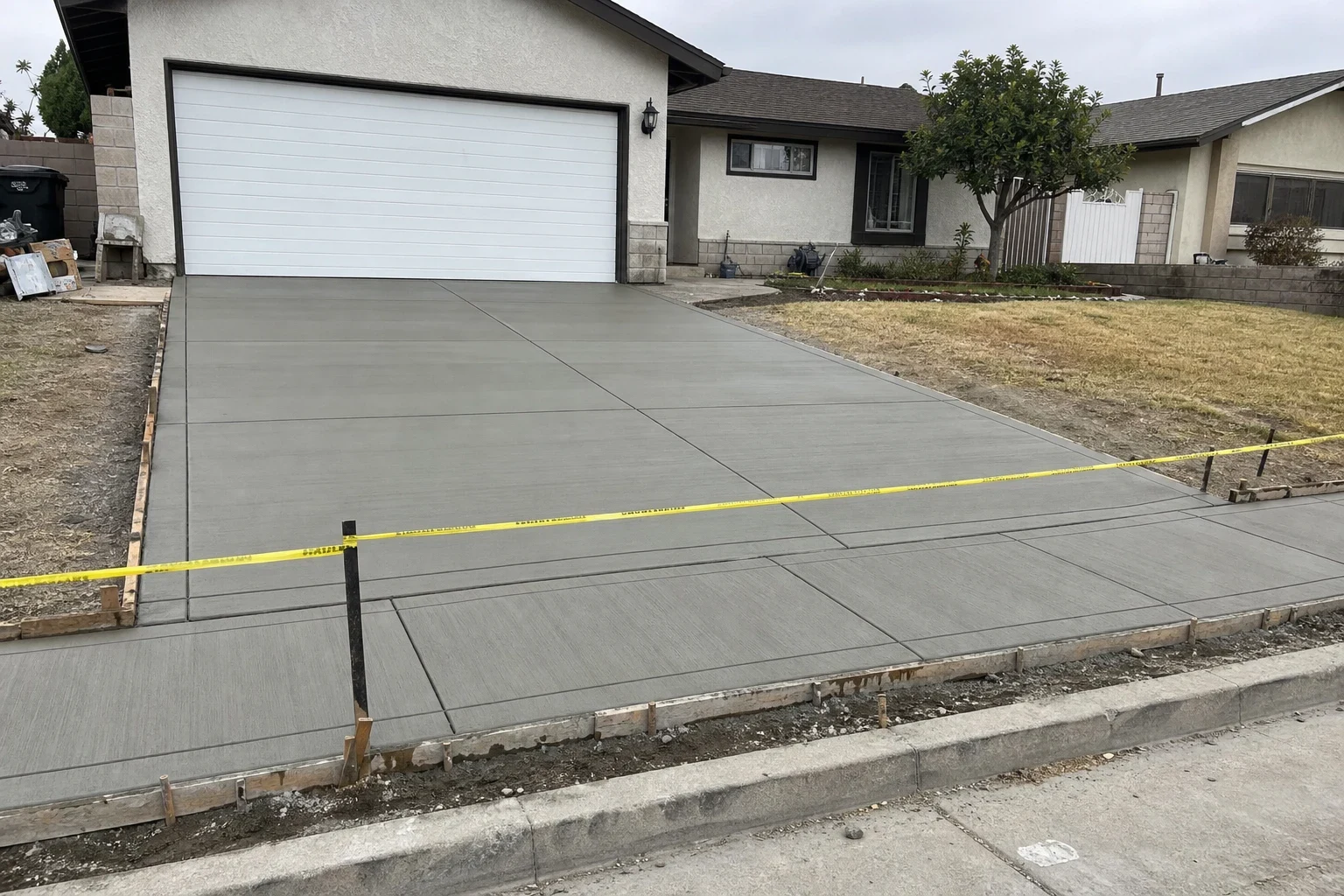
- We set forms so the floor falls gently toward the door for drainage, add isolation joint material against the stem wall, and cut control joints to about a quarter of the slab depth.
- Finish
- A steel-troweled finish is smooth and easy to sweep. A light broom finish is an option if you want more grip near the door.
Signs Your Garage Floor Needs Replacing
Cracks that keep growing
Hairline shrinkage cracks are normal. Cracks that widen each year or have one side higher than the other point to movement in the soil below.
A sunken section by the door
When the slab drops at the threshold, rain runs in instead of out and the door seal leaves a gap you can see daylight through.
Damp spots and white residue
Dark patches or chalky efflorescence mean moisture is moving up through a slab with no vapor retarder under it.
Coatings that won't stick
Paint or epoxy that peels and bubbles within a season is often a moisture problem coming from below, not a bad coating.
Pitting and spalling
A surface that flakes away and leaves loose aggregate has lost its top layer, usually from a weak mix or poor curing when it was first poured.
How a Garage Floor Job Runs
- 1
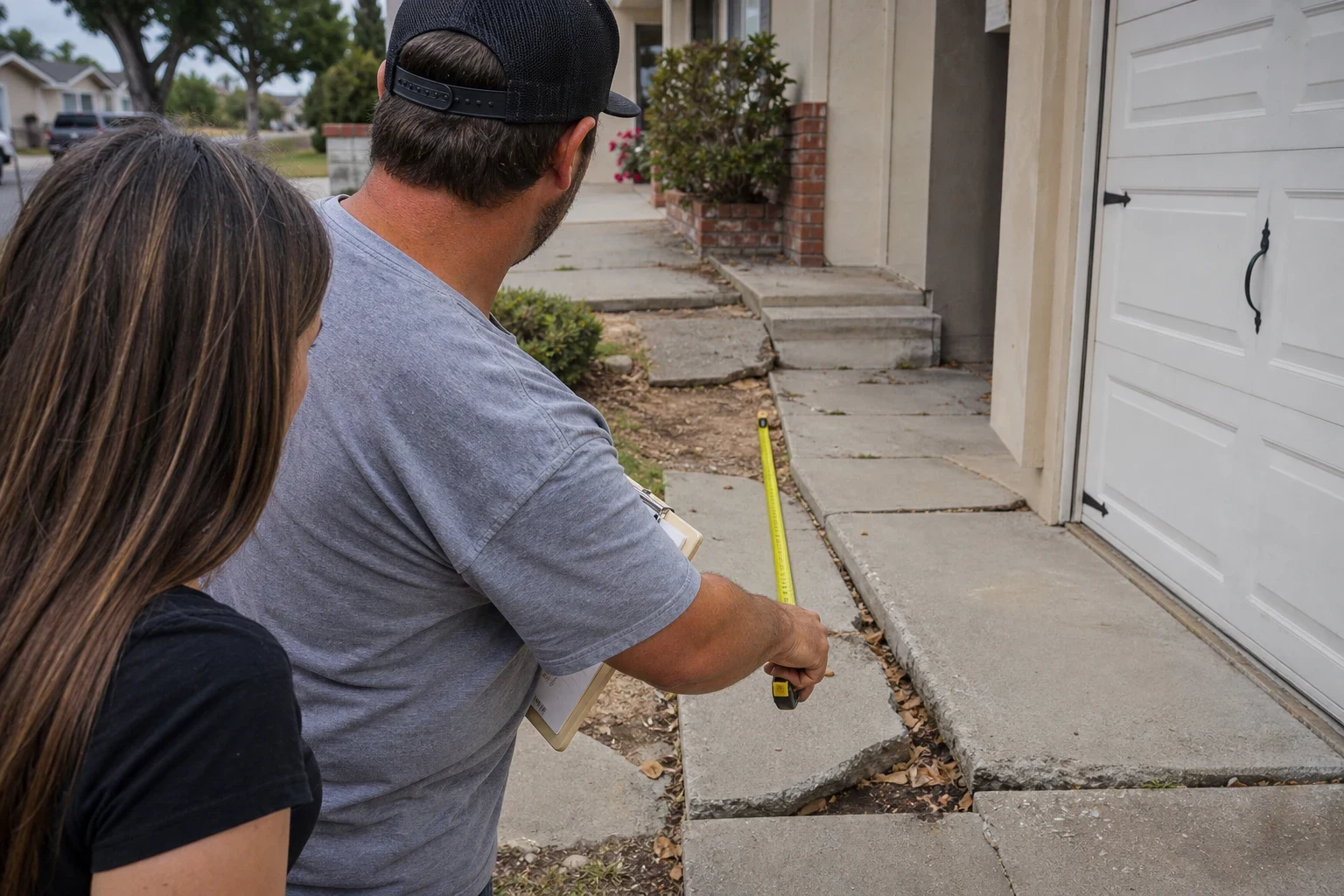
Site visit
We look over the slab, the door threshold, the drainage and the joint where the floor meets the driveway. You then get our price in writing, broken out line by line so you can see where the money goes.
- 2
Paperwork and protection
When the city calls for a permit on the work, we handle the application. You empty the garage, and before any cutting we cover the walls, door track and plantings near the opening.
- 3
Demo and base
Removal and base work usually take a day or two depending on size and access. If inspection is required, it happens before concrete is placed.
- 4
Pour and finish
We place the concrete, screed it to grade, trowel the surface and cut control joints once the slab can take it, typically within a day of the pour.
- 5
Cure and cleanup
We keep the slab moist or apply a curing compound so it gains strength evenly. Then we clean up, remove forms and walk you through when you can use the floor.
What Moves the Cost
Every garage floor is priced from its own measurements and conditions. The biggest swings come from what is under the old slab and how hard it is to get material in and out.
- Size and thickness
- A two-car garage takes far more concrete and rebar than a one-car. A thicker slab for heavy trucks or a lift adds material.
- Removal and access
- A thick or heavily reinforced old slab takes longer to break out. Tight access means more work by hand instead of by machine.
- Soil condition
- Wet or expansive soil may need more excavation and extra base before the pour. We show you what we find before we change the scope.
- Extras under and in the slab
- Rigid foam insulation for a conditioned workshop, a trench drain or a thicker vapor retarder each add cost and each have a clear purpose.
- Permits
- Where a permit and inspection are required, the fees and scheduling are part of the price.
Garage Floor Questions
Something not covered here? (714) 733-1781
How soon can I park on the new floor?
Foot traffic is usually fine after a day or two. We ask you to wait about a week before driving on it. Concrete keeps gaining strength for roughly 28 days, so avoid heavy loads or jacks on it until then.
Can you just pour new concrete over my old floor?
We don't recommend it. A thin layer over a moving slab cracks where the old one does, raises the floor at the door and doesn't add a vapor retarder. Replacing the slab fixes the cause.
Will the new floor crack?
Concrete shrinks as it cures, so some cracking is expected. Control joints give that cracking a planned place to happen, and a compacted base with centered rebar keeps the slab from settling or splitting apart.
When can I epoxy or coat the floor?
Most coatings need the slab to cure about 28 days and dry to the manufacturer's moisture limit. The vapor retarder under the slab is what makes a coating last once it's on.
Does insulating under the slab really help?
In a garage you use as a workshop or gym, yes. Rigid foam under the slab keeps the floor from pulling heat away and keeps it closer to room temperature. For a garage used only for parking, a good vapor retarder is usually enough.
Do I need to empty the whole garage?
Yes, the floor has to be fully clear. Shelving bolted to the wall can often stay if nothing sits on the slab. We go over this when we visit.
Ready for a Flat, Dry Garage Floor
Tell us how you use your garage and what the floor is doing now. We'll explain what's likely happening underneath and how we'd build the new slab.